Disclosure: this post may contain affiliate links; AditsBlogs may earn a commission at no extra cost to you.
By Aditya Singh | AditsBlogs | 29 October 2026
Editorial disclosure: This is a source-based critical essay on Jailer 2’s promotional language and reported premise, not a firsthand screening review. It draws on the official announcement teaser and attributed coverage. No star rating, assessment of the complete film or claim of theatrical attendance is offered.
A familiar hero faces an unfamiliar problem when he returns for a sequel: the audience already knows why everyone should fear him. Surprise has become reputation. For Jailer 2, that shift makes the central critical question less about whether Tiger Muthuvel Pandian can command attention than what the story can do with attention already guaranteed.
The title promises a return. The more demanding promise is renewal. A sequel can enlarge a criminal network, multiply confrontations and assemble more recognisable faces, yet still leave its central character dramatically unchanged. The interesting territory lies between preserving a persona and putting pressure on it.
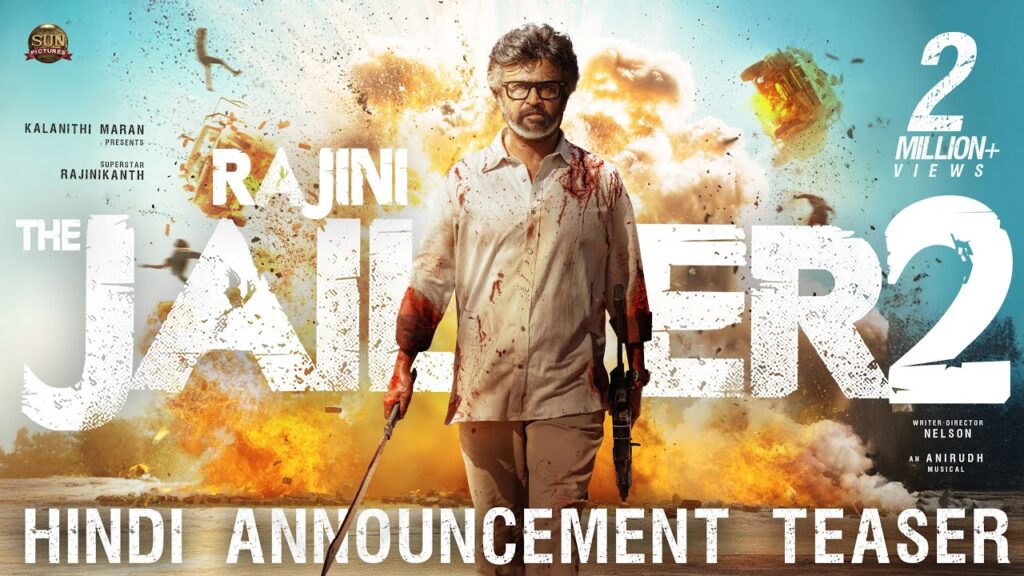
Featured promotional image: Sun Pictures, from the official Hindi announcement teaser. Copyright remains with the respective rights holders. AditsBlogs is independent of the production.
The premise: a past that refuses to stay buried
NDTV’s trailer report describes Tiger living quietly as a driver before enemies connected to the earlier conflict begin looking for him. Its account identifies the returning idol-smuggling network as the bridge between the two films. The October 15, 2026 release is also recorded in The Times of India’s dated review.
As a premise, the driver disguise offers a productive imbalance: the people around Tiger may underestimate him while the audience cannot. That changes the source of suspense. Instead of waiting to discover whether this apparently ordinary man has power, viewers are invited to anticipate when he will reveal it.
Anticipation can be pleasurable, but it needs variation. If every encounter exists merely to demonstrate that opponents have miscalculated, the character risks becoming a mechanism for delivering the same satisfaction. A stronger dramatic question asks what his power costs him, or what it cannot repair.
Dialogue: the authority inside “Tiger Ka Hukum”
The announcement teaser’s short refrain, “Tiger Ka Hukum”—“Tiger’s order”—is identified in Koimoi’s contemporary teaser coverage. Its brevity is the point. It needs no explanation of rank, motive or history; the name itself is presented as sufficient authority.
That is a useful way to understand the promotional rhetoric. An order ends a discussion. A dramatic scene usually begins with competing intentions. When a hero’s words carry the force of a verdict, the surrounding characters need credible desires of their own to prevent every conversation from becoming a ceremonial surrender.
The phrase can work as a compact statement of persona. It cannot, by itself, establish the quality of a screenplay. The critic’s job is to distinguish the pleasure of recognition from the development of a character, even when both arrive in the same line.
Comedy and violence: the uneasy partnership
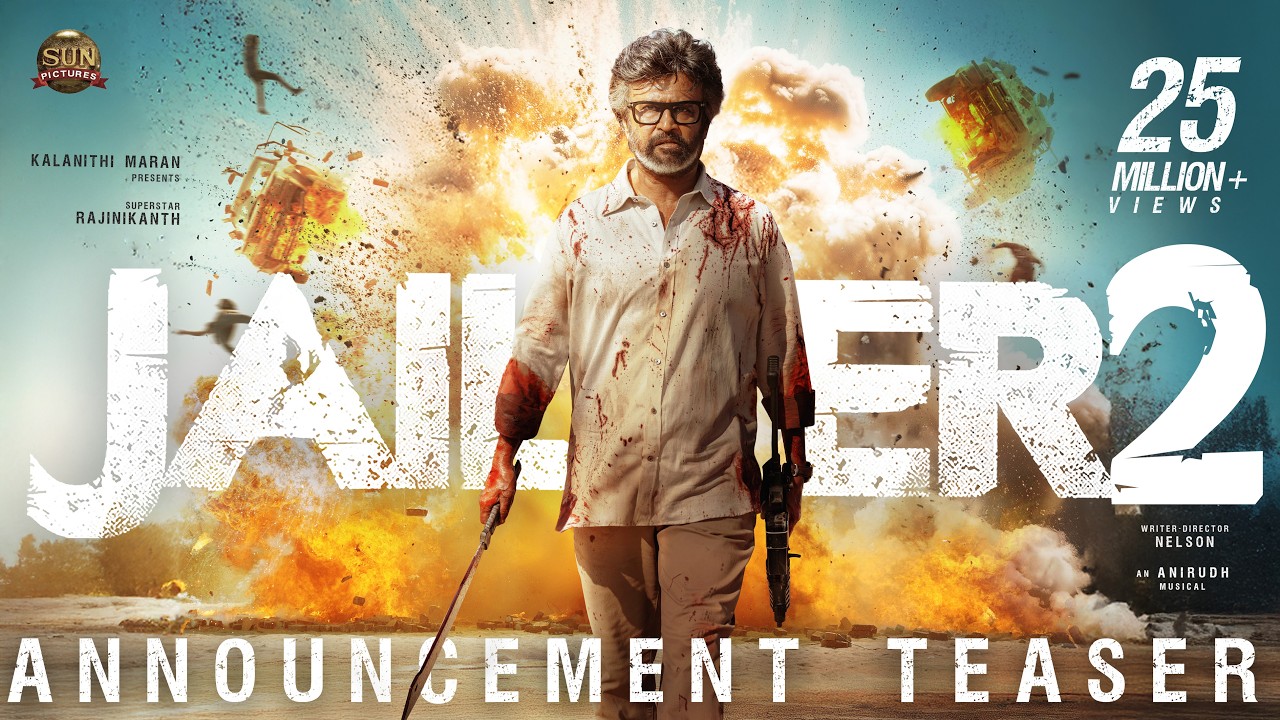
Announcement publicity artwork from Sun TV’s official teaser listing. Sun Pictures / respective rights holders. Promotional view-count text belongs to the original artwork and is not a current audience measurement.
The announcement’s setup places Nelson Dilipkumar and Anirudh Ravichander in an apparently relaxed conversation before violence intrudes, according to Koimoi’s account. The joke depends on a collision of registers: mundane behaviour continues in the vicinity of extraordinary danger.
There is a sharp comic idea here. Fear does not always produce eloquence; sometimes it leaves people awkwardly trying to maintain normality. Such humour can expose the absurdity of a world organised around intimidation.
It can also make brutality feel weightless. The distinction matters. A joke that reveals how people cope with danger has a different dramatic effect from a joke that asks us to stop considering the consequences of danger. Promotional material can establish the combination; judging its balance across the feature requires a full viewing.
The image asks us to recognise power
The publicity artwork reproduced here centres Rajinikanth against an eruption of fire and debris. His spectacles and everyday clothing sit beside conspicuous weapons and destruction. The contrast makes an immediate visual argument: ordinary appearance conceals extraordinary capacity.
What deserves attention is the stillness suggested by that composition. The surrounding world breaks apart while its central figure remains legible and composed. He becomes the fixed point around which chaos is arranged.
This is an interpretation of the artwork, not a claim about the film’s cinematography. A poster compresses a promise into a single image. A feature has to earn that promise across time, through framing, performance, editing and the distribution of attention.
What the published reviews can—and cannot—tell us
In his Times of India review, M Suganth awards the film 3/5 and describes it as a continuation rather than simply a repeat. That is an attributed assessment from another critic, not an AditsBlogs rating.
It provides context for the sequel’s reception, but it cannot replace an independent screening. Agreement between promotional ambition and a published review still leaves important questions open: how long a scene lasts, whether a tonal shift feels earned, and whether a supporting character acquires an inner life beyond a plot function.
Those are questions of execution. They cannot responsibly be settled by a cast list, publicity still or summary.
The critical question that remains
The strongest subject for this source-based reading is the relationship between authority and vulnerability. A hero becomes dramatically interesting when his command encounters a limit that spectacle alone cannot remove.
Jailer 2’s promotional identity makes its confidence unmistakable. Its more demanding artistic test is whether confidence leaves room for uncertainty, consequence and resistance. Until a firsthand screening supports that judgment, the honest conclusion is a question rather than a score: can Tiger’s world challenge him as effectively as it celebrates him?
More film writing: Avengers: Doomsday — release date, cast and what to expect.
STAY CONNECTED
More from AditsBlogs, in your inbox
Get occasional updates on new guides, tools, games and creative posts.
