
- Table of Contents
- Core Strategies for Small Business Success
- Budgeting for Digital Success
- Content Marketing Mastery
- Blog Content Strategy
- SEO: The Game-Changer
- Technical SEO Fundamentals
- Local SEO for Indian Businesses
- Content-Driven SEO Strategy
- Leveraging Social Media Effectively
- Platform-Specific Strategies
- Influencer Marketing Returns
- Email Marketing for Relationship Building
- List Building Strategies
- Automation and Sequences
- Paid Advertising: Getting Results on a Budget
- Google Ads Strategy
- Facebook and Instagram Advertising
- Case Studies: Indian Small Businesses Winning Online
- Case Study 1: Fitness App Success
- Case Study 2: Home Services Growth
- Case Study 3: E-commerce Innovation
- Case Study 4: Retail Personalization
- Key Takeaways & Action Steps
- Immediate Action Plan
- FAQs
- Conclusion
- 📧 Get New Posts by Email
Digital marketing strategies for small businesses have transformed dramatically in 2025. The digital landscape has evolved to a point where small businesses can no longer afford to ignore online marketing. India has 467 million active social media users, representing 32.8% of the population as of 2025. This massive audience presents unprecedented opportunities for businesses willing to invest in digital channels.
The statistics behind successful digital marketing strategies for small businesses paint a compelling picture. Small businesses typically allocate around 11% of their revenue to digital marketing, and for good reason. Content marketing generates 3 times more leads than outbound marketing at less than half the cost. Moreover, SEO leads boast a 14.6% close rate, compared to just 1.7% for outbound leads.
SEMrush – SEO & marketing toolkit
All‑in‑one platform for keyword ideas, competitor research, basic site audits, and simple tracking of your search visibility.
Amazon – creator & work gear
Browse laptops, microphones, lighting, and other basic tools that can support blogging, recording, or work‑from‑home setups.
Some links above are affiliate links. If you choose to purchase through them, it can support this site at no extra cost to you.
In my experience running aditsblogs.com, implementing comprehensive digital marketing strategies for small businesses through a digital-first mindset has consistently doubled my website traffic year-over-year. The shift from traditional marketing to digital channels isn’t just a trend—it’s a necessity for survival and growth in today’s competitive marketplace.
Global social ad spend has increased 10.9% year-over-year, now projected to surpass $276.72 billion in 2025. This growth indicates where smart businesses are investing their marketing dollars. The compound effect of digital marketing means that every rupee invested today can yield exponential returns tomorrow.

Table of Contents
Core Strategies for Small Business Success
Implementing effective digital marketing strategies for small businesses requires a strategic approach built on four foundational pillars. First, define clear, measurable goals whether you’re targeting traffic growth, lead generation, sales conversion, or newsletter signups. Without specific objectives, you’ll struggle to measure success or optimize your campaigns effectively.
Second, develop detailed buyer personas to understand your target audience deeply. 80% of consumers are more likely to purchase from brands that offer personalized experiences. This personalization starts with knowing your customers’ pain points, preferences, and purchasing behaviors.
Third, choose the right digital channels based on where your audience spends time and your business objectives. Facebook offers the highest ROI according to 28% of marketers, followed by Instagram at 22% and YouTube at 12%. However, your specific audience may prefer different platforms.
Fourth, focus relentlessly on content quality and consistency. Businesses that blog consistently get 97% more backlinks and generate significantly more organic traffic. The key is creating valuable content that addresses real customer problems rather than just promoting your products.
Budgeting for Digital Success
Most successful small businesses spend 7-10% of their revenue on marketing annually. Within this budget, content marketing typically accounts for 25-33% of the total marketing spend. For a business generating ₹10 lakh annually, this translates to ₹70,000-₹1 lakh for marketing, with ₹20,000-₹30,000 dedicated to content creation and promotion.
When implementing digital marketing strategies for small businesses, the beauty of these approaches lies in their scalability. You can start with ₹5,000 per month and gradually increase investment based on proven results. Many successful campaigns I’ve run started with minimal budgets but delivered substantial returns through strategic targeting and optimization.
Content Marketing Mastery
Content marketing remains the cornerstone of effective digital marketing strategies for small businesses. Content marketing generates 1,877 leads per month on average for organizations, making it one of the most reliable channels for sustainable growth.
The key to successful content marketing lies in understanding the buyer’s journey. 54% of content marketers believe early-stage content designed to generate awareness and interest provides the most overall value. This means creating educational, informative content that addresses your audience’s initial questions and concerns.
Podcasts, blog posts, and videos are the top three content types for generating awareness and demand. In my experience with aditsblogs.com, blog posts consistently drive the highest organic traffic, while video content achieves the best engagement rates on social media platforms.
Blog Content Strategy
Businesses that publish at least 16 blogs per month generate 4.5x more leads than those publishing infrequently. However, quality trumps quantity every time. I’ve seen single, well-researched blog posts generate more traffic than dozens of low-quality articles.
Focus on long-tail keywords with 1,000-10,000 monthly searches and medium competition. These keywords offer the best opportunity for small businesses to rank on Google’s first page without competing against major corporations. Tools like Google Keyword Planner, Ubersuggest, and Rank Math can help identify these opportunities.
Video Marketing Impact
Short-form videos are the top ROI driver for 71% of video marketers. Platforms like Instagram Reels, YouTube Shorts, and TikTok offer incredible organic reach potential. After seeing a short video, customers are 84% more likely to purchase a product.
Creating video content doesn’t require expensive equipment. Many successful videos are shot on smartphones with good lighting and clear audio. The key is providing value through tutorials, behind-the-scenes content, or customer testimonials.
SEO: The Game-Changer
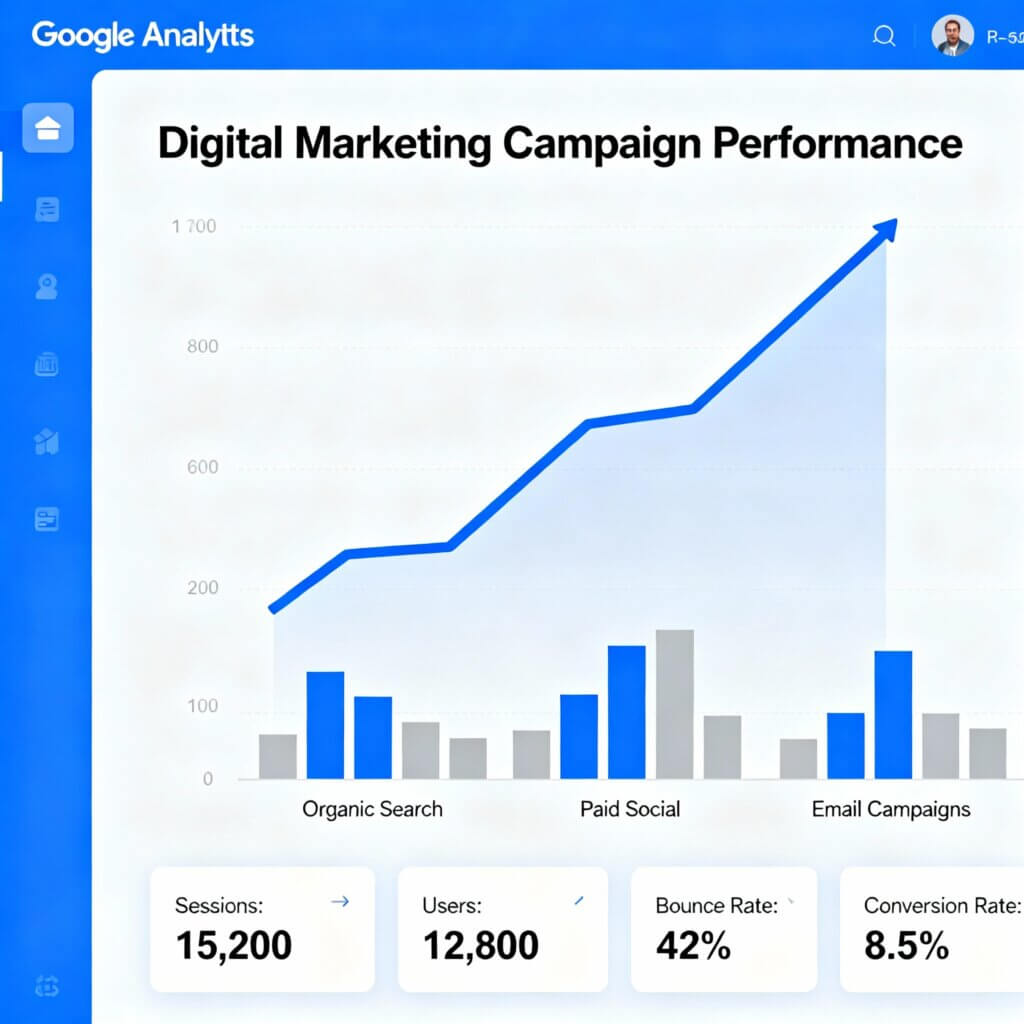
Search Engine Optimization delivers exceptional long-term value for small businesses. SEO provides a minimum ROI of 500% over a 6-12 month period, making it one of the most cost-effective marketing channels available.
The conversion rate advantage is substantial. Organic traffic achieves a 2.4% conversion rate, nearly doubling PPC’s 1.3%. This higher conversion rate stems from the trust and authority associated with organic search results.
Technical SEO Fundamentals
Start with the basics that make the biggest impact. Ensure your website loads quickly—more than 50% of web traffic comes from mobile devices, and slow-loading sites lose potential customers immediately. Use Google PageSpeed Insights to identify and fix performance issues.
Implement proper header tag hierarchy (H1, H2, H3) with your target keywords naturally integrated. Meta descriptions should be 150-160 characters and include compelling calls-to-action. URL structure should be clean and include primary keywords when possible.
Local SEO for Indian Businesses
87% of consumers read online reviews before choosing a local business. This statistic highlights the critical importance of managing your online reputation and optimizing for local search results.
Claim and optimize your Google My Business listing with accurate information, high-quality photos, and regular updates. Encourage satisfied customers to leave reviews and respond professionally to all feedback. Local SEO often provides the fastest results for service-based businesses.
Content-Driven SEO Strategy
Around 3 in 4 content marketers use content to generate leads, and SEO amplifies this effect dramatically. Create comprehensive, authoritative content that establishes your expertise in your industry.
In my experience with stock market analysis content, in-depth guides and tutorials consistently outperform short articles. Google rewards comprehensive content that thoroughly addresses user queries. Target featured snippets by structuring content with clear questions and concise answers.
Leveraging Social Media Effectively
Social media marketing offers unparalleled opportunities for small businesses to connect with their audience. 81% of consumers are swayed by social media to make spontaneous purchases multiple times a year, demonstrating the direct impact on sales.
India’s massive social media user base of 467 million active users represents an enormous market opportunity. However, success requires strategic platform selection and consistent execution rather than attempting to maintain a presence everywhere.
Platform-Specific Strategies
Facebook leads in perceived B2B ROI, with 22% of respondents rating it highest. For B2B businesses, Facebook’s sophisticated targeting options and professional user base make it ideal for lead generation campaigns.
Instagram engagement rates with carousel posts average 1.92%, outperforming both images (1.74%) and videos (1.45%). This data suggests that carousel posts should be a key component of your Instagram strategy, especially for showcasing multiple products or step-by-step processes.
TikTok ads offer an average ROAS of 2.4x compared to traditional display ads. For businesses targeting younger demographics, TikTok’s algorithm-driven discovery can provide exceptional organic reach and paid advertising efficiency.
Influencer Marketing Returns
Influencer marketing delivers an average ROI of $5.78 per $1 spent in 2025, nearly doubling the ROI of traditional digital ads. However, the key lies in choosing the right influencers for your audience.
Micro-influencers (10K-100K followers) average 3.86% engagement rates, compared to just 1.21% for macro-influencers. This higher engagement often translates to better conversion rates and more authentic audience connections.
Email Marketing for Relationship Building
Email marketing consistently delivers exceptional returns for small businesses. For every $1 spent on email marketing, businesses earn an average of $42 in ROI, making it the highest-performing digital marketing channel.
The key to successful email marketing lies in building genuine relationships rather than just sending promotional messages. 60% of consumers make at least one purchase per month after reading an email from a brand, but only 20% of all marketing emails are ever opened.
List Building Strategies
Focus on providing immediate value in exchange for email addresses. Create lead magnets like free guides, templates, or exclusive content that address specific customer problems. I’ve found that offering downloadable resources related to my blog content generates the highest-quality email subscribers.
Segment your email list based on customer behavior, preferences, and purchase history. 80% of consumers are more likely to purchase from brands that offer personalized experiences, and email segmentation is one of the most effective personalization strategies.
Automation and Sequences
Implement automated email sequences for new subscribers, abandoned carts, and post-purchase follow-ups. These automated touchpoints maintain engagement without requiring constant manual effort.
Welcome email sequences should introduce your brand, set expectations, and provide immediate value. Product recommendation emails based on browsing behavior can significantly increase conversion rates and average order value.
The power of email marketing lies in its direct communication channel with your audience. Unlike social media platforms where algorithm changes can impact reach, email gives you direct access to subscribers who have explicitly expressed interest in your content.
Paid Advertising: Getting Results on a Budget
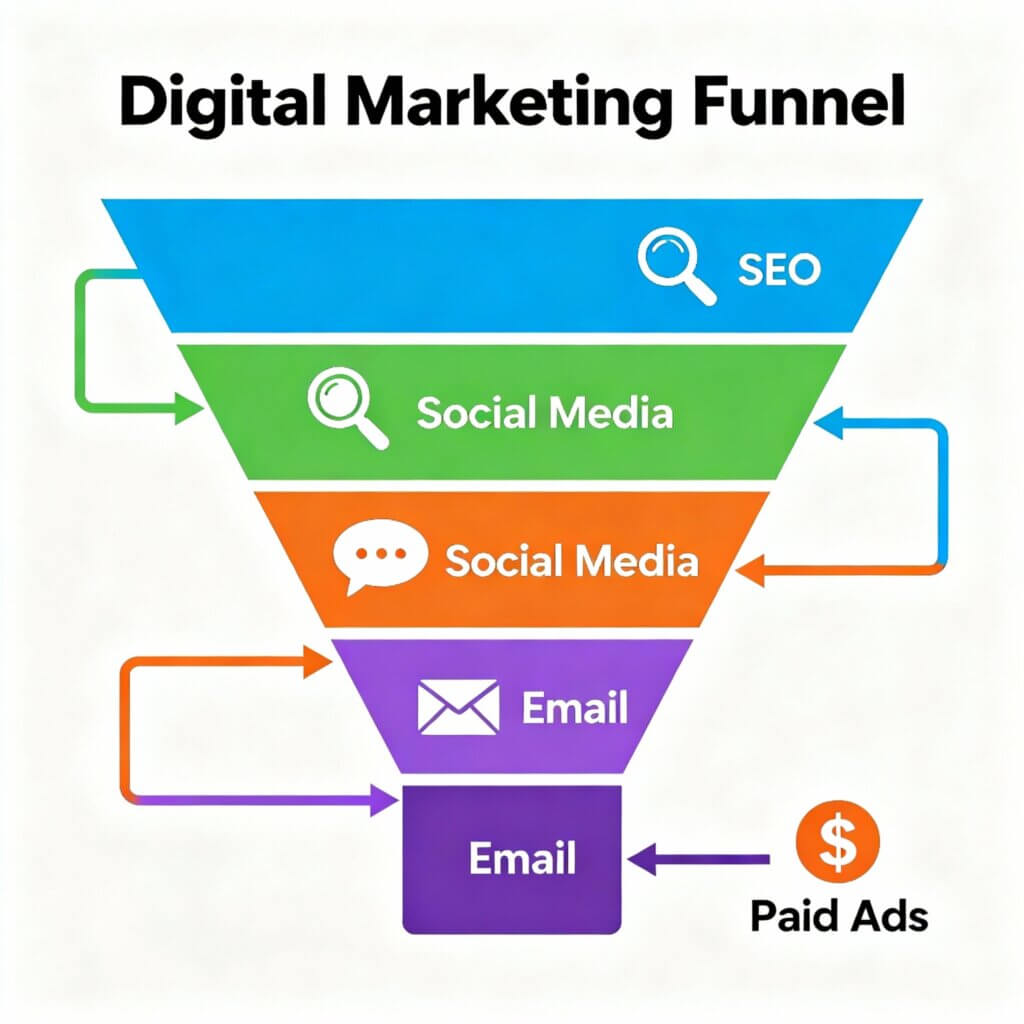
Paid advertising can deliver immediate results when executed strategically. PPC ads yield an average ROI of 200%, with companies earning about $2 for every $1 spent on Google Ads. While lower than SEO’s long-term returns, PPC provides crucial immediate visibility for new businesses.
The average cost per lead with Google Ads has increased to $70.11, making strategic targeting essential for maintaining profitability. However, the average click-through rate of 6.66% indicates that well-crafted ads can achieve strong engagement.
Google Ads Strategy
Start with long-tail keywords that have lower competition and cost-per-click rates. These keywords often indicate higher purchase intent and convert better than broad, expensive terms.
Use ad extensions to maximize visibility and provide additional information without increasing costs. Location extensions, call extensions, and sitelink extensions can significantly improve click-through rates and ad performance.
Implement conversion tracking from day one to measure actual ROI rather than just traffic metrics. Understanding which keywords and ads drive sales allows for intelligent budget allocation and optimization.
Facebook and Instagram Advertising
The average conversion rate for Facebook Ads for lead generation is 8.25%, making it an effective platform for businesses with visual products or services. Facebook’s detailed targeting options allow precise audience selection based on demographics, interests, and behaviors.
Start with small budgets (₹1,000-₹2,000 per day) and scale successful campaigns gradually. Test different ad formats, audiences, and creative elements to identify the most effective combinations for your business.
Retargeting campaigns often deliver the highest ROI by focusing on users who have already shown interest in your products or services. These warm audiences convert at much higher rates than cold traffic.
Case Studies: Indian Small Businesses Winning Online
Real-world examples demonstrate the transformative power of digital marketing for Indian small businesses. These case studies showcase practical applications of the strategies discussed above.
Case Study 1: Fitness App Success
Cult.fit frequently posts short training videos on YouTube Shorts and Instagram, expanding user engagement by 15%. Their strategy focuses on providing immediate value through quick workout demonstrations rather than just promotional content.
The key lesson is that educational content performs better than promotional content across all platforms. By teaching proper exercise techniques and sharing fitness tips, they build trust and authority that translates into app downloads and subscriptions.
Case Study 2: Home Services Growth
UrbanClap upgraded its voice search engine, concentrating on local searches like “best electrician near me,” resulting in a 20% increase in organic voice search traffic. This demonstrates the importance of optimizing for emerging search behaviors.
Voice search optimization requires focusing on natural language queries and local intent. Businesses providing local services can achieve significant traffic increases by optimizing for conversational search terms.
Case Study 3: E-commerce Innovation
Lenskart uses AI chatbots to help customers choose frames, with chatbots handling 30% of sales tasks and reducing customer service workload by 60%. This automation improves customer experience while reducing operational costs.
The integration of AI tools can significantly improve customer service efficiency and sales conversion rates. Small businesses can implement similar chatbot solutions using platforms like Tars, Chatfuel, or even WhatsApp Business API.
Case Study 4: Retail Personalization
Flipkart uses AI to recommend products based on user preferences, increasing average purchase amounts by 30% and consumer loyalty by 25%. Personalization drives both immediate sales and long-term customer value.
Small businesses can implement basic personalization through email marketing platforms, website plugins, or social media advertising tools. The key is using customer data to provide relevant recommendations and content.
Key Takeaways & Action Steps
Successful digital marketing for small businesses requires strategic thinking, consistent execution, and continuous optimization. Based on the data and case studies presented, here are the five most critical takeaways for 2025:
1. Prioritize Content Marketing and SEO – These channels provide the highest long-term ROI and compound returns. Start with keyword research, create comprehensive content, and optimize for search engines. The 500%+ ROI from SEO makes it essential for sustainable growth.
2. Leverage Email Marketing – With $42 ROI for every $1 spent, email marketing should be central to your customer relationship strategy. Focus on building quality lists and creating valuable, personalized content that drives engagement and sales.
3. Strategic Social Media Investment – Choose platforms based on your audience rather than trying to be everywhere. Focus on creating engaging content that provides value rather than just promotional messages.
4. Implement Paid Advertising Strategically – Use PPC for immediate visibility while building organic presence. Start with small budgets, test extensively, and scale successful campaigns gradually.
5. Measure and Optimize Continuously – Track key metrics like conversion rates, customer acquisition costs, and lifetime value. Use data to make informed decisions about budget allocation and strategy adjustments.
Immediate Action Plan
Week 1-2: Conduct keyword research and competitive analysis. Set up Google Analytics and Google Search Console. Create buyer personas and define marketing goals.
Week 3-4: Optimize your website for mobile and speed. Set up email marketing platform and create lead magnets. Claim and optimize Google My Business listing.
Month 2: Launch content creation schedule with focus on blog posts and social media. Begin email automation sequences. Start small-scale PPC campaigns.
Month 3-6: Analyze results, optimize based on data, and scale successful strategies. Expand into additional channels based on initial success.
The key to success lies in starting with one or two channels, mastering them, and then expanding based on proven results rather than spreading efforts too thin across multiple platforms.
FAQs
What is the most cost-effective digital marketing strategy for small businesses?
Content marketing combined with SEO provides the highest long-term ROI at 500%+ over 6-12 months. While it requires initial time investment, the compound returns make it the most cost-effective strategy for sustainable growth.
How much should a small business spend on digital marketing?
Small businesses typically allocate 7-11% of their revenue to marketing. Within this budget, digital channels should represent 60-80% of total marketing spend, with content marketing accounting for 25-33% of the total budget.
Which social media platforms deliver the best ROI for small businesses?
Facebook leads with 28% of marketers rating it highest for ROI, followed by Instagram at 22%. However, platform selection should be based on where your target audience is most active rather than general statistics.
How long does it take to see results from SEO?
SEO typically shows initial results within 3-6 months, with significant results appearing in 6-12 months. The investment timeline requires patience, but the compound returns make it worthwhile for long-term growth.
What are the biggest digital marketing mistakes small businesses should avoid?
The most common mistakes include spreading efforts across too many channels, neglecting mobile optimization, ignoring email marketing, failing to track proper metrics, and expecting immediate results from long-term strategies like SEO.
Conclusion
These digital marketing strategies for small businesses in 2025 offer unprecedented opportunities for those willing to invest strategically. The data consistently shows that businesses combining content marketing, SEO, email marketing, and targeted social media achieve the highest returns.
Success requires focusing on channels that align with your audience and business goals rather than trying to be everywhere at once. Start with one or two proven strategies, master them through consistent execution and optimization, then expand based on measurable results.
Ready to transform your business with proven digital marketing strategies? Download my free digital marketing checklist and join thousands of entrepreneurs already implementing these tactics. What’s your biggest marketing challenge for 2025? Share your questions in the comments below—I read and respond to every one.
The future belongs to businesses that embrace digital transformation. Your competition is already investing in these strategies. The question isn’t whether you can afford to invest in digital marketing—it’s whether you can afford not to.

About Aditya Singh
I write content on Blogging, Digital Marketing, Tech, and Life- skills. I also write Poetry and Short-Stories in my free time.
Related products on Amazon
Suggestions loosely based on this article
Affiliate note: Some links below are affiliate links. If you choose to buy through them, it can support this site at no extra cost to you.


Product details and prices are taken from Amazon pages and can change over time.