

Working from home was supposed to feel freeing. No commute, comfy clothes, more time with family. But if your days now feel like one long, blurry Zoom call, you are not alone.
- Why It Quietly Damage Your Mental Health
- Table of Contents
- 1. Set Clear Work-from-Home Boundaries to Protect Your Mind
- 2. Build a Simple Daily Routine So Working From Home Feels Lighter
- 3. Create a Calm Workspace to Reduce Work-from-Home Stress
- 4. Use Breaks, Movement, and Micro-Rest to Reset Your Brain
- 5. Stay Social to Fight Work-from-Home Loneliness
- 6. Use Digital Tools and Delegation to Lower Work-from-Home Stress
- 7. Real Stories: How Small Changes Reduced Work-from-Home Stress
- 8. FAQ:
- Q1: Do I need a long morning routine to feel better?
- Q2: I’m already so busy. How can I “do more” to reduce stress?
- Q3: Isn’t this all expensive?
- Q4: What if my job expects me to be online all the time?
- Q5: How do I know if I need professional help?
- Q6: Will these mental health tips for working from home stress work for my unique situation?
- 9. Your Next Step to Protect Your Mental Health While Working From Home
- 📧 Get New Posts by Email
Many remote workers report higher stress, loneliness, and trouble switching off compared to those who go into an office. Surveys show that a large share of employees feel their mental health has worsened with remote work, mainly due to blurred boundaries and isolation.
If this sounds like you, take a breath. In this guide, you’ll learn practical, research-backed mental health tips for working from home stress that you can start using today—no complicated systems, just small shifts that protect your mind.
SEMrush – SEO & marketing toolkit
All‑in‑one platform for keyword ideas, competitor research, basic site audits, and simple tracking of your search visibility.
Amazon – creator & work gear
Browse laptops, microphones, lighting, and other basic tools that can support blogging, recording, or work‑from‑home setups.
Some links above are affiliate links. If you choose to purchase through them, it can support this site at no extra cost to you.
After years of working remotely myself and helping other online professionals build healthier routines, I’ve seen what actually works in real life. Let’s walk through it step by step.
Why It Quietly Damage Your Mental Health
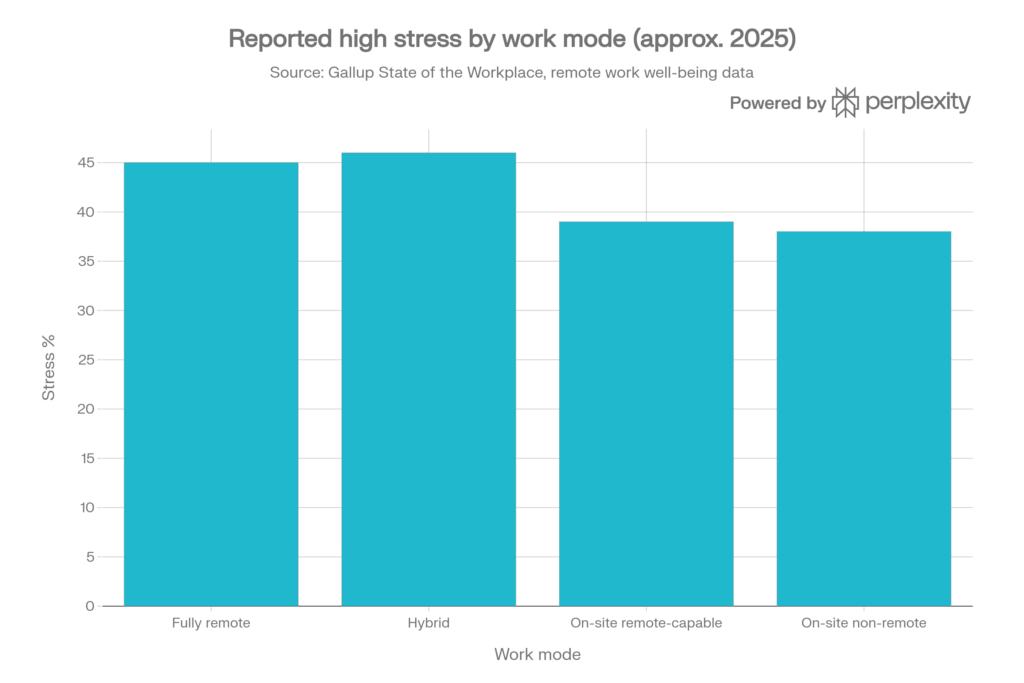
On paper, remote work looks perfect. In reality, it can quietly drain you if you don’t set guardrails. Without a commute or clear “home vs office” line, your brain never gets the signal that work is over. Messages arrive at all hours. You feel guilty if you are not always available.
Studies from health organizations and workplace surveys show that remote workers often:
- Struggle to unplug and feel “always on”
- Experience more loneliness and emotional distress
- Work outside set hours several times per week
- Feel unsupported when it comes to mental health resources
Left unchecked for months, this “just a bit stressed” phase can turn into full burnout, anxiety, sleep problems, and tension at home.
The good news: small, consistent changes can protect your mental health and make working from home feel lighter and more sustainable.
Table of Contents
1. Set Clear Work-from-Home Boundaries to Protect Your Mind
The single most powerful stress reducer is a clear line between “I’m working” and “I’m off the clock.” Most remote workers don’t have that line at all.
Boundaries work because your brain loves patterns. When you consistently start and end work at set times, it stops scanning for emails at midnight and relaxes faster.
Here’s how to implement this today:
- Pick start and end times and stick to them 80% of the time.
- Use a shutdown ritual: close tabs, write tomorrow’s to-do list, log out of work apps.
- Communicate your hours to your boss, team, and family so expectations are clear.
Real example: One client set a hard 6:30 p.m. laptop close time and used a simple “out of office” status in Slack. Within two weeks, her evening anxiety dropped because people no longer expected instant replies after hours.
If you find yourself constantly checking notifications, a distraction-blocking tool like SentryPC can help you block work apps during your “off” hours, so your brain can actually rest.
2. Build a Simple Daily Routine So Working From Home Feels Lighter
Remote work stress often comes from chaos, not workload. When every day looks different, your body stays in a low-level fight-or-flight mode.
A simple routine calms your nervous system by making the day predictable. You waste less energy deciding what to do next and .
Try this starter structure:
- Morning (30–60 min): light movement + coffee/tea + planning your top 3 tasks
- Focus block 1 (90 min): deep work, no notifications
- Midday: lunch away from screens, short walk if possible
- Focus block 2 (90 min): calls, collaboration, emails
- Afternoon: low-energy tasks, inbox tidy, shutdown ritual
One remote developer I worked with stopped jumping straight into Slack. Instead, he spent his first 20 minutes planning his day. His stress dropped because he finally felt ahead of his tasks instead of chasing them.
If you like tracking habits, a simple routine-tracking app like RTYR can help you see your progress and stay accountable without overcomplicating things.
3. Create a Calm Workspace to Reduce Work-from-Home Stress
When your “office” is also your bedroom, dining table, and Netflix spot, your brain never fully knows when it is allowed to relax. That’s a recipe for mental overload.
Environment psychology research shows that separating work and rest spaces—even with small visual cues—can reduce stress and improve focus.
Here’s what to do, even in a small home:
- Pick one dedicated work zone, even if it’s just a specific chair or corner.
- Use physical signals like a desk lamp, notebook, or divider that you only use during work hours.
- Pack away your laptop (or cover it) when you’re off the clock so it’s out of sight.
Example: A remote marketer living in a studio apartment used a foldable table as her “office.” When the table was up, she was at work. When it was folded away, her brain associated that with rest time. Her sleep quality improved noticeably within a week.
If you run a freelance or side-hustle business from home, setting up a simple, clean professional site using Hostinger and Elementor can move messy client conversations out of your DMs and into clear forms and pages—reducing mental clutter and repeated questions.
4. Use Breaks, Movement, and Micro-Rest to Reset Your Brain
Many remote workers sit for hours, only realizing how tense they are when their back or head starts to hurt. That physical stress feeds straight into your mental state.
Short, regular breaks work because they reset your nervous system. Even a slow walk or gentle stretching can lower stress hormones and improve mood.
Build movement into your day like this:
- Micro-break every 60–90 minutes: stand up, stretch, get water, look out a window.
- At least one “real” break (20–30 minutes) away from screens—walk, light chores, or sitting outside.
- End-of-day wind-down: a short walk, a few yoga poses, or deep breathing before shifting into family time.
One remote customer support agent set a timer to do 10 squats and 10 shoulder rolls every hour. It felt silly at first, but within a month, her afternoon headaches were gone, and she felt less drained after her shift.
If your schedule is packed, consider outsourcing one or two repetitive tasks (like simple design work or data entry) on Fiverr. Freeing even one hour a week for a real break can have a big impact on your stress levels.
5. Stay Social to Fight Work-from-Home Loneliness
Remote work can be incredibly isolating. Studies show a significant share of remote workers go days without leaving their homes or speaking to anyone in person, and many report higher levels of loneliness and declining social skills.
Humans aren’t built to live only inside chat windows. Regular social contact is essential for mental health.
Simple ways to add human connection into your week:
- Schedule 1–2 “non-work” calls with friends or family during the week.
- Join a co-working day—even virtually—with colleagues or friends on video.
- Work from a café or library for a couple of hours if your situation allows.
For example, one remote designer started a weekly “silent co-work” Zoom with two friends where they worked quietly but checked in for 5 minutes at the start and end. She felt less alone even though very little actually changed in her workload.
If you sell digital products or services, hosting a small online workshop or Q&A using a simple email tool like Moosend to invite your audience can double as both business growth and a healthy social outlet.
6. Use Digital Tools and Delegation to Lower Work-from-Home Stress
Sometimes the problem isn’t just emotional—it’s practical. You simply have too many little tasks flying at you from all directions. That constant mental juggling is exhausting.
Automation and delegation work because they remove small decisions and repeated actions, giving your brain space to breathe.
Here’s how to lighten your load:
- Automate simple emails (welcome sequences, confirmations, reminders) with a tool like Moosend.
- Delegate busywork like basic editing, graphics, or podcast show notes to trusted freelancers on Fiverr.
- Turn one-off work into assets by packaging checklists, templates, or mini guides as digital products using Gumroad, so you earn without extra hours.
Real example: A freelance writer created a simple “client onboarding kit” and sold it through Gumroad. Instead of answering the same questions over and over, she sent clients to her page. Her inbox shrank and her stress along with it.
If you find that social media or certain sites are your main source of distraction, SentryPC can help you block them during focus blocks so you can finish work earlier and truly relax later.
7. Real Stories: How Small Changes Reduced Work-from-Home Stress
To show you this isn’t just theory, here’s a quick case-style example.
“Arjun” – Remote analyst, two kids at home
- Before: Answering messages late at night, working from the couch, constant interruptions from kids, feeling guilty and exhausted.
- Action: Set clear work hours (10 a.m.–6 p.m.), created a tiny “office corner” with a desk, started using app blocks after 7 p.m., and outsourced one weekly report template design on Fiverr.
- After (4 weeks): Fewer arguments with partner about “always being on the laptop,” better sleep, and more focused work during the day instead of dragging tasks into the night.
These changes were small and inexpensive, but they created a big shift in how he felt about his work—and his life at home.
If you want to see how tools like Fiverr have helped thousands of remote workers delegate stressful tasks and free up mental space, explore their marketplace for ideas that fit your workload.
8. FAQ:
Q1: Do I need a long morning routine to feel better?
No. You do not need a 2-hour miracle routine. Even 10–15 minutes of gentle movement, sunlight near a window, and planning your top three tasks can calm your mind. Start small and only add more if it genuinely helps.
Q2: I’m already so busy. How can I “do more” to reduce stress?
Your goal isn’t to add more tasks. It’s to swap stressful habits for supportive ones. That might mean delegating one recurring task on Fiverr or using Moosend to automate part of your client communication so you can reclaim an hour for rest.
Q3: Isn’t this all expensive?
Many changes are free: boundaries, routines, breaks, and simple workspace tweaks. Paid tools are optional and should save you either time or emotional energy. Start with one low-cost option and only keep it if your stress genuinely drops.
Q4: What if my job expects me to be online all the time?
This is tough and very common. Start with micro-boundaries: mute notifications for 30–60 minutes of deep work, then respond in batches. Over time, gently re-set expectations with your team by sharing your working hours and response times.
Q5: How do I know if I need professional help?
If your stress is constant, you struggle to function day to day, feel hopeless, or notice changes in sleep, appetite, or mood for more than a few weeks, it’s important to talk to a mental health professional. Articles like this are a starting point, not a replacement for therapy.
Q6: Will these mental health tips for working from home stress work for my unique situation?
Everyone’s life is different, but the principles—boundaries, routine, movement, connection, and support—are flexible. Start with the easiest change you can make this week, then adjust the rest to fit your role, family, and energy levels.
9. Your Next Step to Protect Your Mental Health While Working From Home
Working from home does not have to mean living in a constant state of low-level panic. With a few intentional habits—clear boundaries, a simple routine, a calm workspace, real breaks, and support where you need it—you can feel focused during work and present after it.
Remember: building a healthier remote life doesn’t require a total makeover. It takes a series of small, repeatable steps and, when needed, smart use of tools to remove unnecessary stress.
If you’re ready to make your workdays, feel lighter, start by choosing one tip from this guide and putting it into action today. Then, consider adding a time-saving helper like Moosend, Fiverr, or Gumroad to support you as you go.
Your mental health deserves at least as much care as your inbox. Start protecting it now—your future self will thank you.

About Aditya Singh
I write content on Blogging, Digital Marketing, Tech, and Life- skills. I also write Poetry and Short-Stories in my free time.
Related products on Amazon
Suggestions loosely based on this article
Affiliate note: Some links below are affiliate links. If you choose to buy through them, it can support this site at no extra cost to you.


Product details and prices are taken from Amazon pages and can change over time.