Disclosure: this post may contain affiliate links; AditsBlogs may earn a commission at no extra cost to you.
- Is Semrush Worth It in 2026?
- What Is Semrush?
- What should I write?
- Why is my competitor ranking?
- What is wrong with my site?
- Is my SEO improving?
- Why Bloggers and Affiliate Marketers Should Care
- Want to stop guessing and start ranking smarter?
- Best Semrush Features for SEO Growth
- 1. Keyword Magic Tool
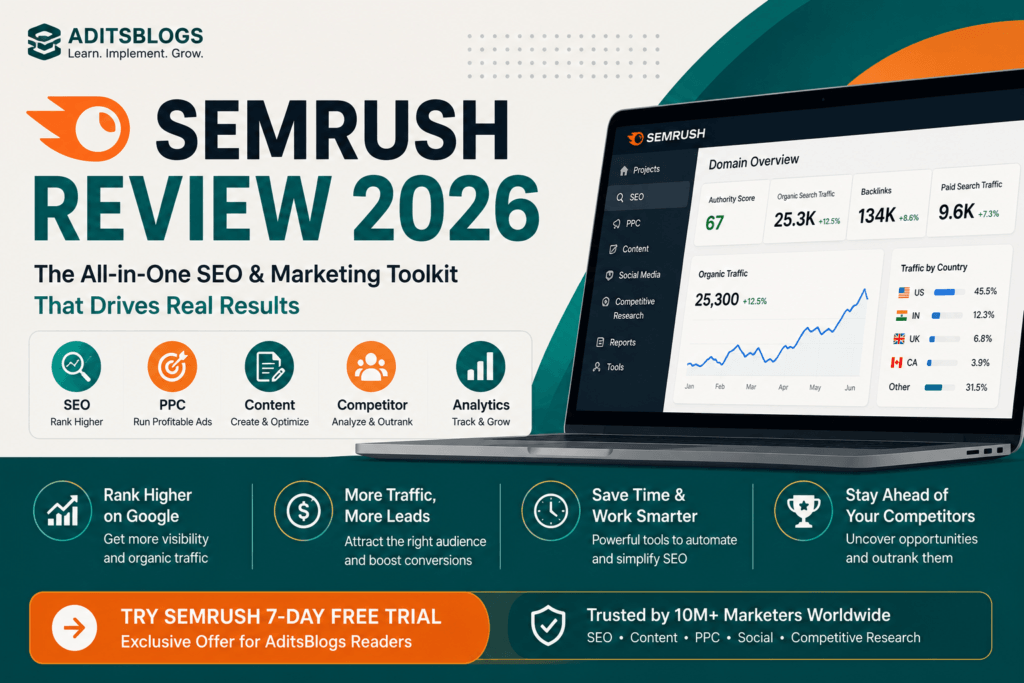
- 2. Domain Overview
- 3. Competitive Research
- 4. Site Audit
- 5. Position Tracking
- 6. Backlink Analytics
- 7. Content Marketing Tools
- Semrush Pros and Cons
- Pros
- Cons
- Who Should Use Semrush?
- Bloggers
- Affiliate Marketers
- Small Businesses
- Freelancers & Agencies
- How I Would Use Semrush for a New Blog Post
- Semrush vs Free SEO Tools
- Best Semrush Plan for Beginners
- Try it before committing
- My Final Verdict
- Ready to Grow Your Website with Smarter SEO?
- FAQs About Semrush
ADITSBLOGS REVIEW 2026
Semrush Review 2026: The SEO & Marketing Toolkit That Helps You Grow Smarter
If you are serious about ranking on Google, finding profitable keywords, spying on competitors, fixing SEO issues and growing affiliate revenue, Semrush is one of the most complete tools you can use.
Quick Verdict
Is Semrush Worth It in 2026?
Yes — Semrush is worth it if you want one serious tool for SEO research, competitor analysis, content planning, PPC research, backlink tracking, site audits and ranking improvement. It is especially useful for bloggers, affiliate marketers, agencies, freelancers and business owners who do not want to guess what to write or how to rank.
The biggest benefit of Semrush is simple: it helps you make decisions using data. Instead of randomly publishing blog posts, you can find what people search for, check what competitors rank for, identify content gaps and fix technical SEO issues before they damage your traffic.
What Is Semrush?
Semrush is an all-in-one digital marketing platform used for SEO, keyword research, content marketing, competitor analysis, PPC research, backlink analysis, rank tracking, local SEO and website audits.
For bloggers and affiliate marketers, Semrush can help answer the most important questions:
What should I write?
Find keywords, topics and content ideas people are already searching for.
Why is my competitor ranking?
Analyze competitor keywords, backlinks, traffic sources and content gaps.
What is wrong with my site?
Run site audits to find technical SEO issues, broken links and crawl problems.
Is my SEO improving?
Track keyword positions, visibility and ranking movement over time.
Why Bloggers and Affiliate Marketers Should Care
Most bloggers fail because they publish content without keyword intent, competition analysis or monetization planning. Semrush helps you build a content strategy before writing the article.
- Find low-competition keywords with buying intent.
- Discover what your competitors are ranking for.
- Identify profitable affiliate content opportunities.
- Improve old blog posts using keyword and content gap data.
- Track whether your SEO work is actually improving rankings.
Want to stop guessing and start ranking smarter?
Use Semrush to research keywords, analyze competitors and create content that has a better chance of bringing traffic and sales.
Start Semrush Free Trial →Best Semrush Features for SEO Growth
1. Keyword Magic Tool
This is one of the most useful Semrush tools for bloggers. You can enter one seed keyword and discover thousands of keyword ideas, questions, long-tail phrases and related search terms.
For affiliate content, this helps you find keywords like “best tools for bloggers,” “Semrush vs Ahrefs,” “best SEO tool for small business,” and other buyer-intent keywords.
2. Domain Overview
Domain Overview gives you a snapshot of any website. You can check estimated organic traffic, top keywords, backlinks, authority score and competitor movement.
This is powerful because you can study successful websites in your niche and understand what is already working.
3. Competitive Research
Semrush lets you analyze competing domains and discover which keywords they rank for, which pages bring them traffic and where your content gaps are.
4. Site Audit
The Site Audit tool checks your website for technical SEO problems such as broken links, crawl errors, slow pages, missing tags, duplicate content and other issues that may affect rankings.
5. Position Tracking
Position Tracking helps you monitor your keyword rankings daily. This is useful after publishing new content or updating old posts because you can see whether your SEO efforts are working.
6. Backlink Analytics
Backlinks are still important for SEO. Semrush helps you analyze backlinks, referring domains, anchor text and competitor backlink strategies.
7. Content Marketing Tools
Semrush can help with topic research, SEO content templates, content optimization and tracking content performance.
Semrush Pros and Cons
Pros
- All-in-one SEO and marketing toolkit.
- Excellent keyword research features.
- Strong competitor analysis data.
- Useful for bloggers, agencies and small businesses.
- Site audit helps fix technical SEO issues.
- Great for content planning and affiliate keyword research.
Cons
- Can feel expensive for beginners.
- Too many features may confuse new users at first.
- Needs regular use to get full value.
- Data should be used as guidance, not as a 100% exact guarantee.
Who Should Use Semrush?
Bloggers
Use it to find keyword ideas, update old posts and grow organic traffic.
Affiliate Marketers
Use it to find buyer-intent keywords and competitor content gaps.
Small Businesses
Use it to improve local visibility, content strategy and website SEO health.
Freelancers & Agencies
Use it for audits, reports, competitor research and client SEO planning.
How I Would Use Semrush for a New Blog Post
If I were creating a new affiliate blog post, I would not start by writing. I would first use Semrush to validate the topic.
Enter the main topic in Keyword Magic Tool.
Filter for long-tail and low-competition keywords.
Check competitor pages already ranking on Google.
Analyze backlinks and content depth of competitors.
Create a better article with stronger structure and clearer intent.
Track keyword movement after publishing.
Semrush vs Free SEO Tools
Free SEO tools are useful for basic research, but they usually become limited when you need deeper competitor analysis, ranking tracking, backlink data and content gap research.
| Feature | Free Tools | Semrush |
|---|---|---|
| Keyword Research | Basic | Advanced |
| Competitor Analysis | Limited | Strong |
| Rank Tracking | Limited/Manual | Dedicated Tracking |
| Site Audit | Basic | Detailed |
| Backlink Analysis | Limited | Advanced |
| Best For | Beginners testing SEO | Serious growth and monetization |
Best Semrush Plan for Beginners
If you are just starting, begin with the lowest suitable plan or the free trial. Do not buy the highest plan immediately unless you already manage multiple websites or client projects.
My practical recommendation is simple: start with Semrush, research your niche, audit your site, find 20 to 30 strong content opportunities, and then decide whether the tool is giving you enough value to continue.
Try it before committing
Use the trial period to test keyword research, competitor analysis, site audit and rank tracking.
Try Semrush 7-Day Free Trial →My Final Verdict
Semrush is not for people who want to randomly publish content and hope for results. It is for bloggers, affiliate marketers, freelancers, agencies and business owners who want to build SEO with proper research.
If you use Semrush properly, it can help you find better keywords, understand competitors, fix SEO problems and create content with a stronger chance of ranking.
The tool is not magic. You still need good content, consistency and patience. But compared to guessing, Semrush gives you a much better SEO direction.
Ready to Grow Your Website with Smarter SEO?
Start with Semrush, analyze your website, find better keywords and build a content strategy based on data — not guesswork.
Start Semrush Free Trial Now →FAQs About Semrush
Is Semrush good for beginners?
Yes, but beginners should start slowly. Focus first on keyword research, domain overview, site audit and position tracking.
Is Semrush worth it for bloggers?
Yes, Semrush is useful for bloggers who want to find better keywords, analyze competitors and improve old posts for more traffic.
Can Semrush help with affiliate marketing?
Yes. Affiliate marketers can use Semrush to find buyer-intent keywords, review competitor content and discover content gaps.
Does Semrush guarantee rankings?
No SEO tool can guarantee rankings. Semrush gives data and insights, but results depend on content quality, competition, backlinks, technical SEO and consistency.
Should I use Semrush or free SEO tools?
Free tools are fine for basic research. Semrush is better when you need deeper keyword data, competitor analysis, rank tracking, backlink insights and site audits.