

Getting your blog posts to rank on Google’s first page in 2025 requires more than just sprinkling keywords throughout your content. With Google’s increasingly sophisticated algorithms prioritizing Experience, Expertise, Authoritativeness, and Trustworthiness (E-E-A-T), successful SEO blog writing now demands a strategic blend of authentic expertise, technical optimization, and genuine value creation.akoi+2
- Understanding Google’s 2025 Ranking Priorities
- Master Keyword Research for Strategic Targeting
- Choosing Your Primary Keyword
- Leveraging Long-Tail Keywords
- Strategic Keyword Placement
- Craft Compelling, Click-Worthy Titles
- Title Optimization Formula
- Structure Content for Maximum Readability and Engagement
- Introduction That Hooks Readers
- Body Content Best Practices
- Implement E-E-A-T to Build Trust and Authority
- Demonstrate First-Hand Experience
- Showcase Expertise and Credentials
- Build Authoritativeness Through External Validation
- Strengthen Trust Signals
- Strategic High-Authority Backlink Integration
- Types of High-Authority Links to Include
- Link Integration Best Practices
- Optimize Technical SEO Elements
- Meta Description Excellence
- Image Optimization for SEO and Accessibility
- Schema Markup Implementation
- Maximize Mobile Optimization and Page Speed
- Mobile-First Design Principles
- Page Speed Optimization
- Enhance Readability for Human Readers and Search Engines
- Target Flesch Reading Ease Score
- Formatting for Scannability
- Build Strategic Internal Linking Architecture
- Internal Linking Best Practices
- Create Compelling Calls-to-Action
- Effective CTA Strategies
- Leverage Voice Search Optimization
- Voice Search Optimization Techniques
- Maintain Content Freshness for Long-Term Rankings
- Content Update Strategy
- Implement Topic Clusters for Topical Authority
- Topic Cluster Architecture
- Encourage Engagement Through FAQs
- Frequently Asked Questions About SEO Blog Writing
- Final Thoughts: Your Roadmap to SEO Blog Writing Success
- Need Professional SEO Content That Ranks?
- 📧 Get New Posts by Email
This comprehensive guide will walk you through everything you need to know to create blog posts that not only rank well but also engage readers and drive meaningful conversions. Whether you’re a seasoned content creator or just starting your blogging journey, these proven strategies will help you dominate search engine results in 2025.
Understanding Google’s 2025 Ranking Priorities
Before diving into tactics, it’s crucial to understand what Google values most in 2025. The search giant has made it abundantly clear that high-quality content remains king. In fact, studies show that content quality has surpassed backlinks as the top ranking factor, with Google’s algorithms now testing newly-published content to see if it satisfies user search intent.firstpagesage+1
SEMrush – SEO & marketing toolkit
All‑in‑one platform for keyword ideas, competitor research, basic site audits, and simple tracking of your search visibility.
Amazon – creator & work gear
Browse laptops, microphones, lighting, and other basic tools that can support blogging, recording, or work‑from‑home setups.
Some links above are affiliate links. If you choose to purchase through them, it can support this site at no extra cost to you.
The top-ranking pages on Google now average 1,447 words, but length alone doesn’t guarantee success. Google prioritizes content that completely responds to users’ needs and provides detailed, actionable solutions. Additionally, with 83.58% of Google traffic now coming from mobile devices, mobile optimization has become non-negotiable for SEO success.monsterinsights+1
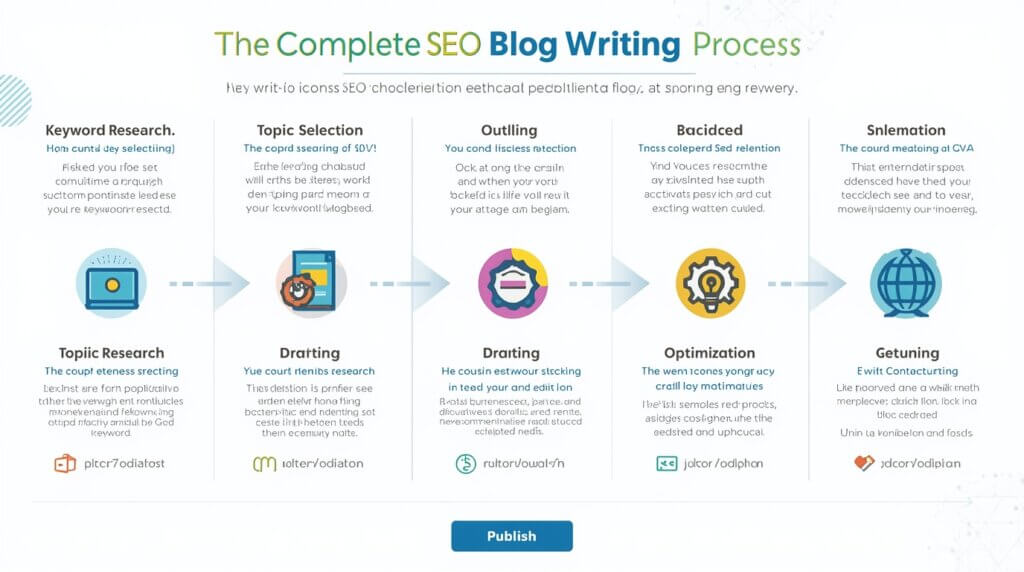
Master Keyword Research for Strategic Targeting
The foundation of any successful SEO blog post starts with strategic keyword research. Your approach should focus on finding the sweet spot between search volume and competition.
Choosing Your Primary Keyword
Select one primary keyword with 1,000-10,000 monthly searches that aligns with your expertise and audience needs. This keyword should reflect genuine user intent—whether informational, commercial, navigational, or transactional. Research shows that 70% of searchers have informational intent, making educational content particularly valuable.outbrain+2
Use tools like Semrush, Ahrefs, or Google Keyword Planner to identify keyword opportunities. For budget-conscious bloggers, free alternatives like AnswerThePublic and Ubersuggest can provide valuable insights.storychief
Leveraging Long-Tail Keywords
Long-tail keywords—specific phrases typically containing three or more words—offer tremendous SEO value in 2025. These keywords face less competition, deliver higher conversion rates, and align perfectly with voice search optimization.semrush+1
For example, instead of targeting “running shoes,” focus on “best running shoes for flat feet women 2025.” While the search volume may be lower, visitors searching for these specific terms are further along in the buying journey and more likely to convert.storychief
If you’re creating extensive content optimization strategies, tools like Rytr can help generate keyword variations, while CopyOwl.ai offers research and citation capabilities for in-depth blog writing.
Strategic Keyword Placement
Once you’ve identified your target keywords, strategic placement is essential:bynder+1
- Title (H1): Include your primary keyword naturally within 60-70 characters
- First paragraph: Bold your primary keyword in the opening 150 words
- URL slug: Create a clean, keyword-rich URL under 60 characters
- Meta description: Feature your keyword within 150-160 characters
- Subheadings (H2/H3): Incorporate keyword variations and LSI keywords
- Body content: Maintain natural keyword density without stuffing
Research indicates that keyword density should remain around 1-2%, focusing on semantic relevance over exact matches. Google’s semantic search capabilities now understand context and related concepts, making natural language more important than rigid keyword repetition.searchatlas+3
Craft Compelling, Click-Worthy Titles
Your blog title is the first—and sometimes only—impression you make on potential readers. Studies reveal that 80% of readers will read a headline, but only 20% will read the entire article. Even more striking, the difference between a great and average headline can increase click-through rates by up to 500%.wearekujenga
Title Optimization Formula
Create titles that balance SEO value with human appeal:wearekujenga
Power Words: Include terms like “Ultimate,” “Complete,” “Proven,” “Best,” “Guide,” “Secret,” or “Expert”ahrefs
Numbers: Titles with numbers generate 36% more clicksahrefs
Optimal Length: Keep titles between 60-70 characters to avoid truncation in search resultssteelcroissant+1
Keyword Placement: Position your primary keyword at the beginning when possiblewearekujenga
Effective Title Examples:
- “How to [Primary Keyword]: Complete Guide for 2025”
- “7 Proven [Keyword] Strategies That Actually Work”
- “Ultimate [Keyword] Guide: Expert Tips for Beginners”
For creative title generation and content ideation, Gumroad offers various title template resources, while platforms like Udemy provide courses on headline psychology.
Structure Content for Maximum Readability and Engagement
Content structure significantly impacts both user experience and SEO performance. Well-organized content helps readers find information quickly and signals quality to search engines.bynder+1
Introduction That Hooks Readers
Your introduction should accomplish three critical goals in 150-200 words:yoast+1
- Hook readers with a compelling statistic, bold statement, or relatable problem
- Feature your primary keyword (bolded) in the first paragraph
- Preview the value readers will gain from your post
Consider adding a table of contents with jump links for longer posts. This improves navigation and can help you capture featured snippets—which 99.58% already rank in positions 1-10.backlinko+1
Body Content Best Practices
Structure your main content with these proven techniques:outbrain+2
Strategic Subheadings: Use H2 and H3 tags with keyword variations every 200-300 words
Short Paragraphs: Limit paragraphs to 2-3 sentences maximum for scannability
Lists and Bullets: Break up dense information into digestible chunks
Visual Elements: Include relevant images, infographics, and videos to enhance engagement
White Space: Use generous spacing between sections to reduce cognitive load
Research shows that blog posts with clear, direct headlines generate 38% more engagement. Additionally, the average time on site for top-10 search results is 3 minutes and 10 seconds, emphasizing the importance of creating content that holds attention.backlinko+1
For hosting your blog on a fast, reliable platform, consider Hostinger, which offers optimized WordPress hosting specifically designed for SEO performance. Alternatively, Systeme.io provides an all-in-one platform for bloggers managing content, email marketing, and sales funnels.
Implement E-E-A-T to Build Trust and Authority
Google’s E-E-A-T framework has become central to content evaluation in 2025. This is especially critical for YMYL (Your Money or Your Life) topics, but increasingly applies across all niches.spacebar+2
Demonstrate First-Hand Experience
The addition of “Experience” to Google’s quality guidelines emphasizes first-hand, real-world knowledge. Content needs to feel lived-in and authentic:lsdigital+1
- Share personal anecdotes and specific examples from your own experience
- Include photos, videos, and real data from your testing or usage
- Use language that demonstrates familiarity (e.g., “When I encountered this issue…”)
- Present case studies with specific results and measurable outcomes
Showcase Expertise and Credentials
Expertise can’t be faked in 2025. Google expects content backed by people who genuinely know their subject:akoi+1
- Feature detailed author bios with relevant credentials and experience
- Include quotes from verified professionals with appropriate credentials
- Reference your years of experience and industry knowledge
- Share advanced tips that only experts would know
- Use industry terminology correctly without excessive jargon
If you’re creating educational content or courses, platforms like Udemy can help you monetize your expertise, while Preply offers opportunities for one-on-one teaching in specialized subjects.
Build Authoritativeness Through External Validation
Your site’s authoritativeness increases when others reference you. Strategies include:spacebar
- Conducting original research and publishing data studies
- Creating comprehensive guides that become go-to resources in your niche
- Building topic clusters around core subjects to demonstrate depthsemrush+1
- Earning backlinks from high-authority domains (.gov, .edu, industry leaders)
- Getting quoted in publications through services like HARO
Strengthen Trust Signals
Trustworthiness is about security, transparency, and credibility:sitecentre+1
- Use HTTPS with a valid SSL certificate
- Display contact information prominently
- Create detailed author bios with social media links
- Be transparent about affiliations and sponsored content
- Include privacy policies and editorial guidelines
- Cite credible sources with proper attribution
Strategic High-Authority Backlink Integration
Linking to authoritative external sources strengthens your content’s credibility and provides value to readers. Strategic outbound linking has become a critical component of SEO in 2025.textuar+2
Types of High-Authority Links to Include
Incorporate 3-5 high-authority external links per 1,000 words:rocktherankings+1
Government and Educational Sites: Link to .gov and .edu sources for statistics and research data. Examples include CDC.gov, NIH.gov, and university research publications.
Industry Leaders: Reference established SEO and marketing authorities like Moz, Ahrefs, SEMrush, and Google Search Central.developers.google+1
Original Research: Link to peer-reviewed studies, industry surveys, and data-driven reports from credible publications.
Tool References: When mentioning software or tools, link to their official websites for transparency and credibility.
Link Integration Best Practices
Never force links into unnatural contexts. Instead:textuar+1
- Use descriptive anchor text that explains what readers will find (avoid “click here”)
- Open external links in new tabs to keep readers on your site
- Balance external links with 3-5 internal links to your own content
- Ensure links are contextually relevant and add genuine value
Optimize Technical SEO Elements
Technical optimization ensures search engines can properly crawl, index, and rank your content.backlinko+2
Meta Description Excellence
Your meta description doesn’t directly impact rankings but significantly influences click-through rates. Craft compelling descriptions that:searchengineland+1
- Stay within 150-160 characters to avoid truncationdevelopers.google+1
- Include your primary keyword naturallysearchengineland
- Use active voice and action-oriented languagedevelopers.google
- Incorporate a soft call-to-action (e.g., “Learn more,” “Discover how”)searchengineland
- Clearly address user intent and preview the value they’ll receive
Example: “Master SEO blog writing with our complete 2025 guide. Includes proven strategies, expert tips, and actionable steps to boost rankings by 40%.”
Image Optimization for SEO and Accessibility
Images enhance user experience and provide additional SEO opportunities:aioseo+2
Descriptive Alt Text: Write concise descriptions under 125 characters that include relevant keywords naturallyaioseo
File Optimization: Compress images using modern formats like WebP to improve page speedupskillist
Descriptive Filenames: Use keyword-rich filenames instead of generic IMG_3294.jpgamsive
Proper Sizing: Ensure images are appropriately sized for their display dimensions
Alt Text Best Practice: Imagine describing the image to someone with closed eyes. If they can clearly picture it, your alt text is effective.backlinko
For professional image editing and optimization, Canva offers user-friendly tools, while photographers might appreciate jAlbum for creating optimized web galleries.
Schema Markup Implementation
Schema markup helps search engines understand your content and can significantly improve visibility through rich results:singlegrain+3
Article Schema: Essential for blog posts, displaying headline, author, and publish datepageoptimizer
BlogPosting Schema: Specifically designed for blog contentpageoptimizer
FAQ Schema: Displays questions and answers directly in search resultsoneupweb+2
HowTo Schema: Perfect for tutorial content with step-by-step instructionsaioseo
WordPress users can implement schema easily using plugins like Rank Math or Yoast SEO. For non-WordPress sites, Google’s Structured Data Markup Helper simplifies code generation.icecubedigital+2
Maximize Mobile Optimization and Page Speed
With mobile devices generating 40 billion visits compared to desktop’s 9 billion, mobile optimization is absolutely critical for SEO success in 2025.upskillist
Mobile-First Design Principles
Implement responsive design that automatically adjusts to any screen size:bluehost+1
- Use fluid grids and flexible images with relative units
- Create touch-friendly elements with adequate tap targets
- Ensure readable typography without zooming
- Test across various devices including foldable screensupskillist
Sites using responsive design report 2.5 times higher conversion rates compared to non-optimized alternatives.upskillist
Page Speed Optimization
If your site takes over 5 seconds to load, 90% of mobile users may leave immediately. Target these Core Web Vitals benchmarks:upskillist
- Largest Contentful Paint (LCP): Under 2.5 seconds
- First Input Delay (FID): Under 100 milliseconds
- Cumulative Layout Shift (CLS): Under 0.10
Speed Optimization Techniques:webdudes+1
- Compress images and enable lazy loading
- Minify CSS, JavaScript, and HTML
- Leverage browser caching and CDN delivery
- Eliminate render-blocking resources
- Use GTmetrix or PageSpeed Insights for performance audits
Choosing a quality hosting provider impacts speed significantly. Hostinger offers excellent performance at competitive prices, while GoDaddy and BigRock provide robust options for different budget levels.
Enhance Readability for Human Readers and Search Engines
Readability directly impacts user engagement, which influences SEO performance.textuar+2
Target Flesch Reading Ease Score
The Flesch Reading Ease score measures content accessibility on a 0-100 scale, with higher scores indicating easier reading. Blog writing typically targets scores between 60-70, equivalent to 8th-9th grade reading level.ahrefs+2
Factors Affecting Readability:
- Sentence length: Shorter sentences improve comprehension
- Word complexity: Simpler vocabulary increases accessibility
- Paragraph structure: Break up dense text into digestible chunks
Tools like Yoast SEO, Hemingway Editor, and Grammarly provide real-time readability feedback. However, remember that readability scores are guidelines, not absolutes. Always prioritize your target audience’s needs over perfect scores.yoast+1
Formatting for Scannability
Bold key phrases to emphasize important concepts without overusebynder
Use transition words to create smooth flow between ideasoutbrain
Incorporate bucket brigades—phrases that keep readers engaged (e.g., “Here’s the thing:”)
Add callout boxes or blockquotes for statistics and key takeaways
Include white space liberally to reduce visual overwhelm
For grammar and readability checking, Grammarly offers AI-powered suggestions, while Rytr can help rephrase complex sections for better clarity.
Build Strategic Internal Linking Architecture
Internal linking is one of the most powerful yet underutilized SEO strategies. Proper internal linking:siteimprove+3
- Distributes page authority throughout your site
- Helps search engines discover and index new content
- Improves user navigation and time on site
- Establishes topical authority and content relationships
Internal Linking Best Practices
Link Placement: Add 3-5 internal links per post to relevant existing contentaioseo+1
Descriptive Anchor Text: Use keyword-rich phrases that clearly indicate destination contentsearchengineland
Contextual Relevance: Link only when genuinely helpful to readerssiteimprove
Fresh Content to Old: Update older posts with links to newer related contenttrafficthinktank
Topic Clusters: Create hub-and-spoke linking structures around core topicsconductor+2
No Over-Optimization Penalty: Unlike external links, there’s no penalty for robust internal linking, so link generously where appropriate.storychief
Create Compelling Calls-to-Action
Every blog post should guide readers toward a specific next action. Without clear CTAs, you miss opportunities for engagement, conversions, and list building.omniconvert+2
Effective CTA Strategies
Be Specific: “Download Your Free SEO Checklist” beats generic “Click Here”cxl+1
Create Urgency: Use phrases like “Limited Time,” “Today Only,” or “Before It’s Gone”omniconvert
Demonstrate Value: Explain exactly what readers gain by taking actioncontentwriters
Strategic Placement: Position CTAs after solving a problem or delivering valuewrittent
High-Converting CTA Examples:cxl+1
- “Get Started for Free” (reduces risk and friction)
- “Claim Your Discount Now” (urgency + value)
- “Download Your Free Guide” (value exchange)
- “Join Our Community Today” (belonging and inclusion)
- “Start Your Free 30-Day Trial” (risk-free commitment)
If you’re promoting affiliate products, subtle integration works best. For example, when discussing website building, naturally mention: “For those starting their blogging journey, Hostinger offers beginner-friendly hosting with one-click WordPress installation.” Or when covering design tools: “Professional bloggers often use Elementor for creating visually stunning page layouts without coding.”
Leverage Voice Search Optimization
With 50% of searches now voice-based and 58% of users relying on voice search for local queries, optimizing for conversational queries is essential in 2025.upskillist
Voice Search Optimization Techniques
Natural Language Keywords: Target complete questions rather than fragmented phrasesnightwatch+1
Conversational Content: Write as you speak, using a natural, helpful tonenightwatch
Featured Snippet Optimization: Structure content to answer specific questions conciselycontent-whale+1
Local SEO Focus: 46% of Google searches are local, so include location-based optimizationupskillist
Long-Tail Keywords: Voice searches tend to be longer and more specificstorychief+1
Example: Instead of optimizing for “SEO tips,” target “What are the best SEO tips for beginner bloggers in 2025?”
Maintain Content Freshness for Long-Term Rankings
Content freshness has become increasingly important as a ranking factor. Google’s “Freshness” update prioritizes new content for certain query types, particularly hot topics, recurring events, and frequently updated information.dashclicks+2
Content Update Strategy
Research indicates Google considers content “fresh” when approximately 30% is updated. However, quality matters more than frequency—updates must provide genuine value aligned with your topic and audience needs.whitespark
When to Update Content:siegemedia+1
- Quarterly: Review high-traffic posts for accuracy and relevance
- Bi-annually: Update statistics, examples, and outdated references
- Annually: Comprehensive refreshes of evergreen content
- As Needed: When industry changes or new data becomes available
Content Refresh Priorities:siegemedia
- Pages experiencing traffic decline
- Content ranking on page 2 of search results (optimization opportunity)
- Posts with high bounce rates or low engagement
- Content containing outdated information or broken links
For content management and scheduling updates, Systeme.io offers comprehensive blogging tools, while Moosend can automate email notifications when you publish refreshed content.
Implement Topic Clusters for Topical Authority
The topic cluster model—consisting of pillar pages linked to related cluster content—has revolutionized SEO strategy. This approach signals to Google that your site is an authoritative resource on specific subjects.clariantcreative+3
Topic Cluster Architecture
Pillar Page: Comprehensive 2,000+ word cornerstone content covering your core topic broadlyezrankings
Cluster Content: In-depth articles targeting long-tail keywords related to specific subtopicsezrankings
Strategic Linking: Bidirectional links between pillar and cluster pages using consistent anchor textclariantcreative
Benefits of Topic Clusters:clariantcreative
- Improved SEO rankings: When one cluster page performs well, it elevates rankings for connected pages
- Better user experience: Visitors find comprehensive information without leaving your site
- Established authority: Demonstrates deep knowledge and expertise on topics
- Sales enablement: Provides educational content for qualifying leads
For example, a pillar page on “Content Marketing Strategy” might link to cluster posts like “Email Marketing Best Practices,” “Social Media Content Calendar,” “SEO Content Writing,” and “Content Distribution Channels.”
Encourage Engagement Through FAQs
Adding a Frequently Asked Questions section serves multiple SEO purposes:meetanshi+2
- Targets question-based keywords popular in voice search
- Provides opportunities for featured snippet capture
- Increases time on page by addressing reader concerns
- Implements FAQ schema for rich result displayseoclarity+1
FAQ Section Best Practices:
- Include 5-10 relevant questions based on actual user queries
- Provide concise, direct answers (40-60 words each)
- Use natural, conversational language
- Implement FAQ schema markup for enhanced SERP visibility
Frequently Asked Questions About SEO Blog Writing
Q: How long should an SEO blog post be in 2025?
A: While top-ranking content averages 1,447 words, focus on comprehensiveness rather than arbitrary word counts. Your post should be long enough to thoroughly address the topic and answer all related questions—typically 1,500-2,500 words for competitive keywords.aioseo+3
Q: How many keywords should I use in a blog post?
A: Focus on one primary keyword with 3-5 related long-tail variations. Maintain 1-2% keyword density while prioritizing natural language and semantic relevance over exact keyword repetition.rankability+2
Q: Do I need to update old blog posts for SEO?
A: Yes. Regular content updates signal freshness to Google and can significantly improve rankings. Aim to refresh high-traffic posts quarterly and comprehensively update evergreen content annually.penfriend+3
Q: How important are backlinks in 2025?
A: Backlinks remain important but have been surpassed by content quality as the top ranking factor. Focus on creating link-worthy content that naturally attracts backlinks rather than aggressive link-building campaigns.backlinko+2
Q: Can AI-written content rank well on Google?
A: Google doesn’t penalize AI content specifically but prioritizes helpful, original content that demonstrates E-E-A-T. Only 12.4% of search results contain high amounts of AI content, suggesting human expertise and editing remain crucial for top rankings.backlinko
Final Thoughts: Your Roadmap to SEO Blog Writing Success
Mastering SEO blog writing in 2025 requires balancing technical optimization with authentic, valuable content creation. Success comes from:
✅ Strategic keyword research targeting realistic competition levels
✅ Compelling titles that drive clicks and engagement
✅ Well-structured content optimized for readability and scannability
✅ E-E-A-T implementation demonstrating genuine expertise and trustworthiness
✅ High-authority backlinks supporting your claims and building credibility
✅ Technical optimization including meta descriptions, schema markup, and mobile performance
✅ Internal linking establishing topical authority and site architecture
✅ Regular updates maintaining content freshness and relevance
✅ Clear CTAs guiding readers toward meaningful next actions
Remember that SEO is a long-term investment. While some content may rank quickly, most successful blog posts require 3-6 months to reach their full ranking potential. Stay consistent, focus on providing genuine value, and continuously refine your approach based on performance data.
Need Professional SEO Content That Ranks?
Implementing these strategies requires time, expertise, and consistent effort. If you’re looking to accelerate your blog’s growth without the learning curve, our team of experienced SEO content writers can help you create ranking-optimized blog posts that drive organic traffic and conversions.
Contact us today to discuss how we can develop a custom content strategy tailored to your business goals, audience needs, and competitive landscape. Let us handle the technical complexity while you focus on growing your business.

About Aditya Singh
I write content on Blogging, Digital Marketing, Tech, and Life- skills. I also write Poetry and Short-Stories in my free time.
Related products on Amazon
Suggestions loosely based on this article
Affiliate note: Some links below are affiliate links. If you choose to buy through them, it can support this site at no extra cost to you.


Product details and prices are taken from Amazon pages and can change over time.