Disclosure: this post may contain affiliate links; AditsBlogs may earn a commission at no extra cost to you.
- Quick verdict: who should try Systeme.io?
- What the platform does
- Free plan and paid pricing: what to check first
- 1. Choose a resource that solves one small problem
- 2. Build one focused signup page
- 3. Make the thank-you page useful
- 4. Write a short welcome sequence
- 5. Check the sender and test the complete journey
- 6. Publish the link where the resource is relevant
- What to measure before upgrading
- Frequently asked questions
- Final recommendation
Affiliate disclosure: This guide contains affiliate links. AditsBlogs may earn a commission if you purchase through them, at no extra cost to you. This is a research-based setup guide, not a hands-on performance review.
A visitor reads your article, finds it useful, and leaves.
Start with the AditsBlogs SEO Brief Builder to plan a resource around a specific reader problem. A relevant free resource can give that reader a reason to stay in touch. But connecting a signup page, a download, and a welcome email can become a project of its own.
This Systeme.io guide explains how to plan a simple lead magnet funnel for a blog or small service business. The goal is one useful resource delivered reliably, with a clear next step for readers who want more help. You do not need a complicated sales sequence to begin.
Quick verdict: who should try Systeme.io?
Consider it if you are starting an email list and want to evaluate connected page-building and email tools in one account. Begin with a small experiment before paying. If your existing WordPress form and email service already deliver your resource reliably, compare the practical benefit of switching with the work of migrating.
It may be a weaker fit if you need very specific designs, complex integrations, or an established automation setup that would be costly to rebuild. A new tool will not fix an offer that readers do not want.
Explore Systeme.io through AditsBlogs
What the platform does
Systeme.io brings funnel pages and email marketing into one platform. Its official funnel overview describes a visual editor and multi-step page setup; its email overview describes broadcasts, sequences, and contact segmentation. Features and account limits still need checking against your chosen plan.
Free plan and paid pricing: what to check first
Checked 2 November 2026: The official pricing FAQ lists Free at 2,000 contacts and 3 funnels, with 1 email campaign and 1 automation rule. It lists monthly Startup at US$17, Webinar at US$47, and Unlimited at US$97. These are published USD figures, not an INR checkout quote. Confirm billing frequency, taxes, currency conversion, and current limits before subscribing.
For this first experiment, keep the structure small enough to fit the available campaign and automation allowances. Upgrade when a specific limit blocks a working process. Avoid paying for capacity just because you hope to need it later.
1. Choose a resource that solves one small problem
Start with the question readers ask immediately after finishing your article. A post about choosing blog topics could offer a topic-selection worksheet. A service page could offer a website audit checklist. A recipe blog might offer a printable shopping list.
Make the resource useful on its own. A vague “ultimate guide” can be harder to explain than a one-page checklist with a clear purpose. Before building anything, write: “This helps [reader] complete [small task] without [common obstacle].”
Illustrative example: “This checklist helps a new blogger review an article before publishing, without forgetting links, image descriptions, and the final proofreading pass.” This is a suggested offer, not a claim about actual subscriber results.
Need help deciding the article angle first? Use the AditsBlogs SEO Brief Builder to organise the reader, topic, and outline.
2. Build one focused signup page
Create a funnel for collecting subscribers and choose a simple page template. Interface labels can change, so follow the current dashboard and help documentation if your menus differ. Remove sections that compete with the main action.
A useful first page needs a headline, a short explanation, a preview of the resource, an email field, and a clear button. Add a privacy link and explain what future emails the reader is agreeing to receive. Ask for additional information only when it serves a clear purpose.
Sample headline: “Check your next blog post before you hit publish.”
Supporting copy: “Get a practical checklist for links, formatting, images, and proofreading.”
Button: “Send me the checklist.”
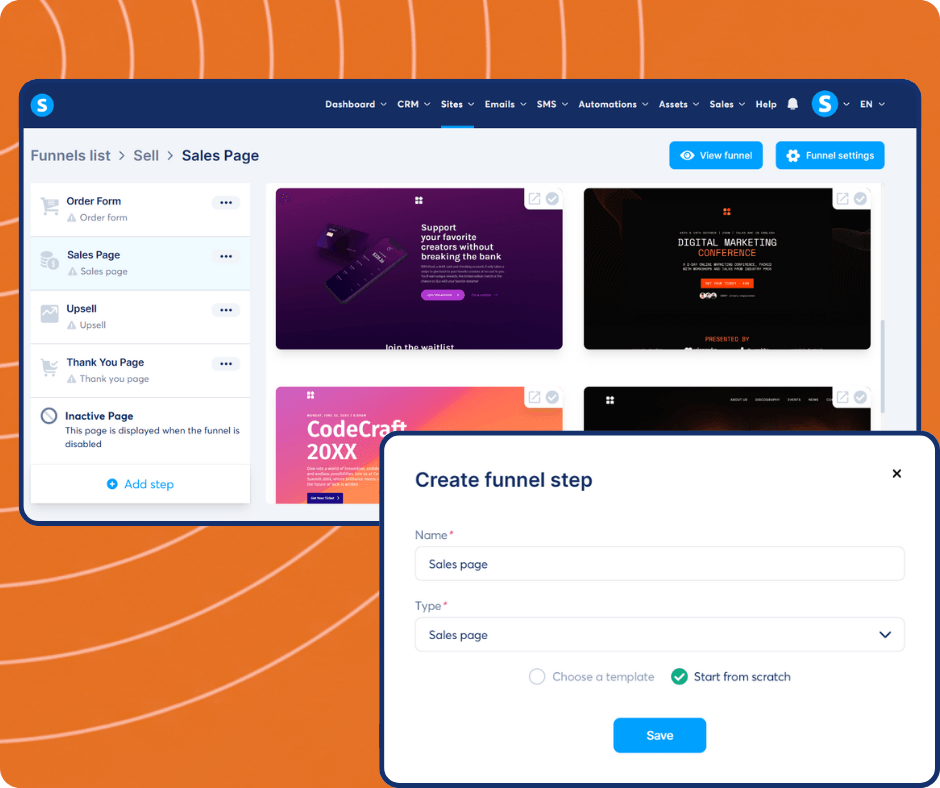
Official product screenshot from Systeme.io’s sales funnel page. Shown as a product illustration; interface details may change.
3. Make the thank-you page useful
After signup, confirm that the request worked. Tell the reader where to find the resource and what to do if the email does not arrive. If appropriate for your offer, provide a direct download as well.
Keep one optional next action, such as reading a related tutorial. A thank-you page packed with unrelated offers can make a simple download feel like a trap. Test the resource link on a phone before inviting subscribers.
4. Write a short welcome sequence
Plan one campaign and check how your account handles enrolment before adding extra automation. A simple sequence could deliver the resource immediately, follow with one practical example, then invite a reply or introduce a relevant service. Treat the following as a suggested editorial plan, not a required platform workflow.
Email 1 — Deliver: Use a subject such as “Your blog publishing checklist.” Put the download near the top, explain how to use it, and set expectations for future messages.
Email 2 — Help: Send a worked example of one checklist item. For instance, explain how to check that a link opens the intended page. Give the reader a task they can complete in a few minutes.
Email 3 — Invite: Ask which publishing task causes the most difficulty. If you offer help, describe the scope clearly. Avoid invented testimonials, promised rankings, or guaranteed income.
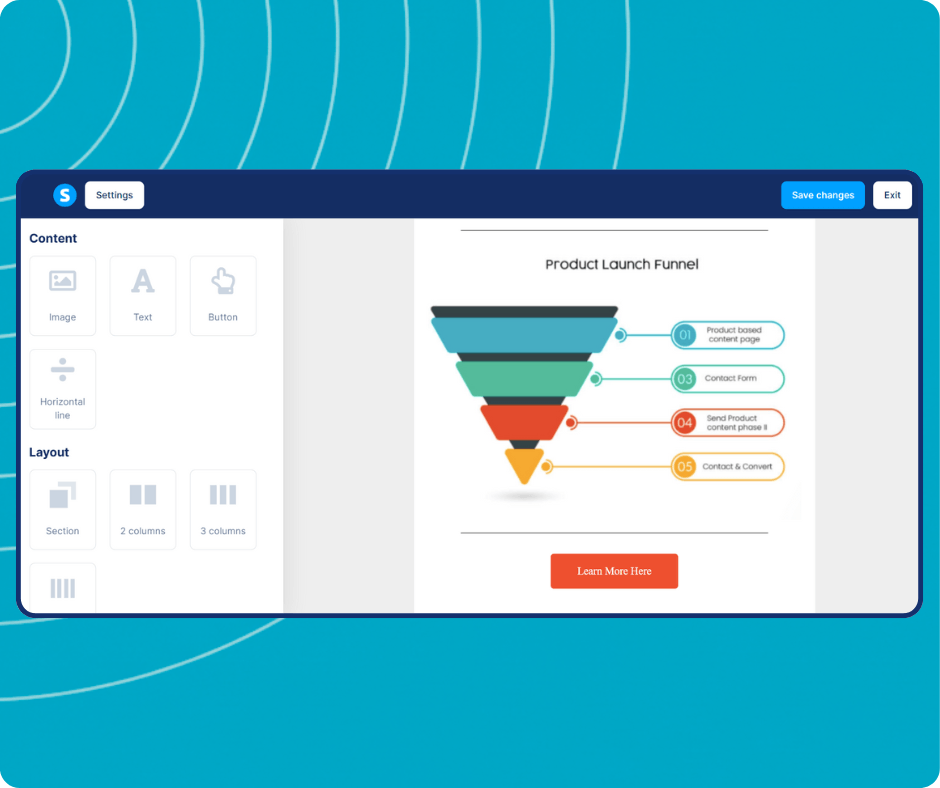
Official product screenshot from Systeme.io’s email marketing page. This is the vendor’s interface example, not an AditsBlogs campaign result.
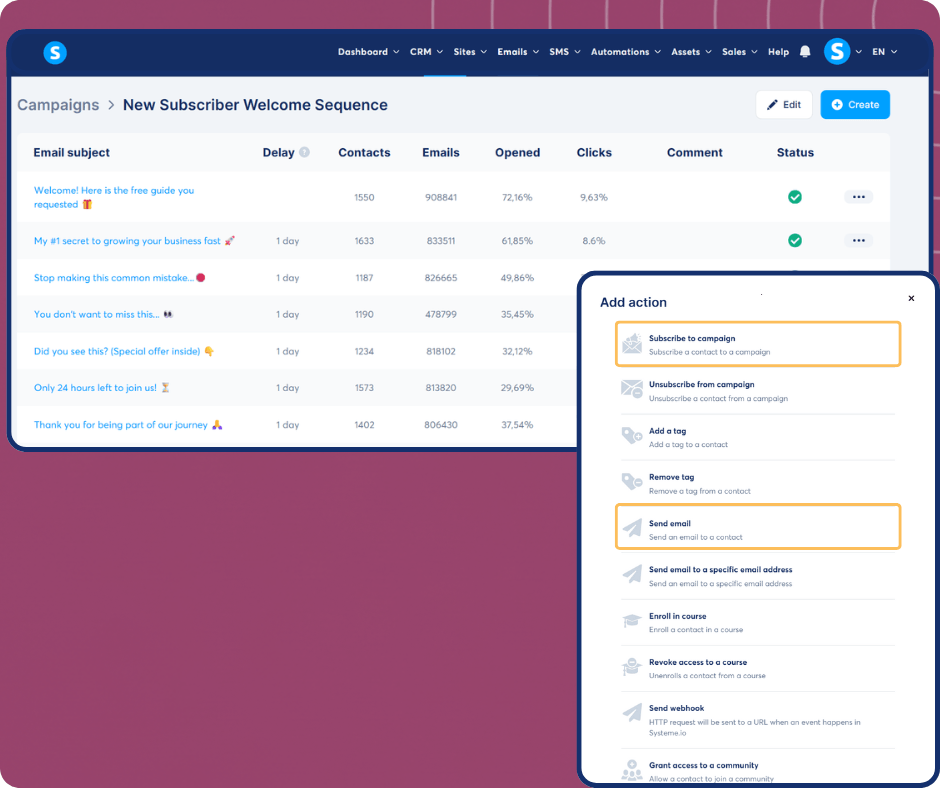
Official product screenshot. Source: Systeme.io. Vendor example, not AditsBlogs results.
5. Check the sender and test the complete journey
Use a sender address you can monitor. Follow the platform’s current sender-verification and domain-authentication instructions. Preserve existing email records when making DNS changes, and verify delivery with test messages before sending to subscribers.
Run a fresh signup using an address you control. Check the mobile page, form submission, thank-you message, contact record, campaign enrolment, resource link, and unsubscribe process. Confirm that unsubscribed contacts do not continue receiving the sequence. Do not assume that a successful form submission proves the email arrived.
Import an existing audience only after checking permission, duplicates, and unsubscribe records. Keep a backup and test a small segment before moving an established list. Purchased or unrelated contacts are a poor foundation for a useful newsletter.
6. Publish the link where the resource is relevant
Place the signup link beside an article section that introduces the problem your resource solves. A checklist about article publishing belongs in a writing workflow, rather than in every unrelated post. Describe the benefit honestly and use the same resource name on the article, signup page, and delivery email.
Keep your main blog in place while testing. A separate funnel can be an experiment; rebuilding the whole website is unnecessary to find out whether readers want one resource.
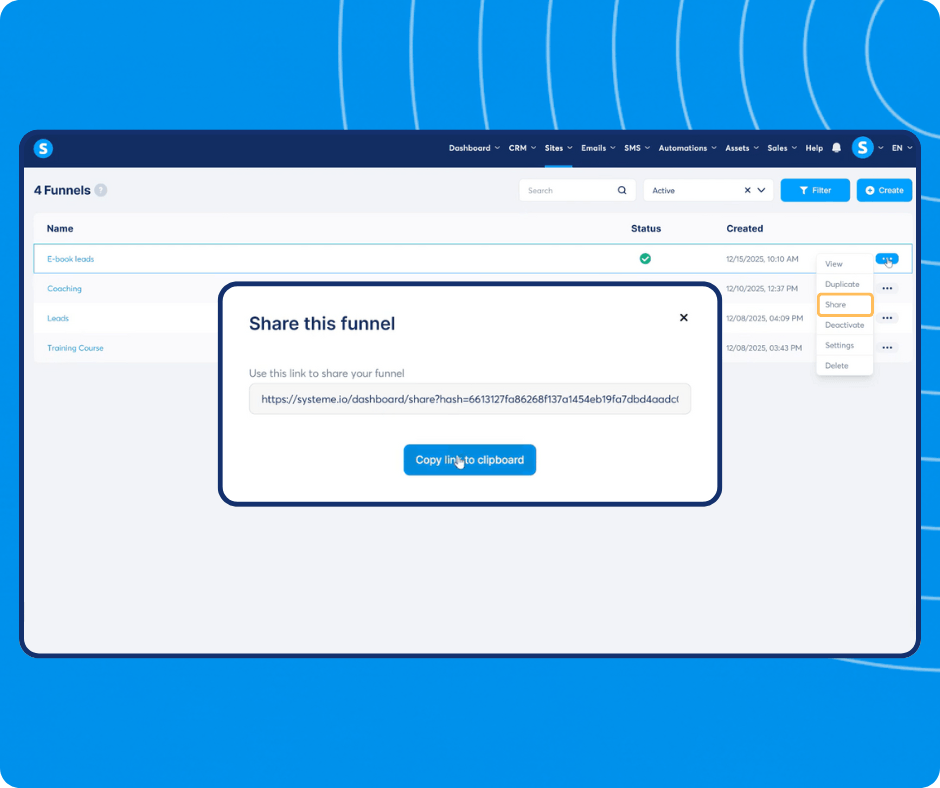
Official product screenshot. Source: Systeme.io. Vendor example, not AditsBlogs results.
What to measure before upgrading
Track visits to the signup page, completed signups, successful resource delivery, useful replies, and any resulting enquiries or purchases. Define a consistent period and traffic source so comparisons mean something.
Fictional calculation: If 200 people visit and 10 subscribe, the signup rate is 10 ÷ 200 × 100 = 5%. That arithmetic illustrates the metric; it is not a benchmark or expected outcome. If signups are low, inspect audience fit and the offer before buying more software.
For an existing stack, compare total cost and maintenance effort, including migration time. Paying for overlapping tools can erase the savings a bundled platform appears to offer.
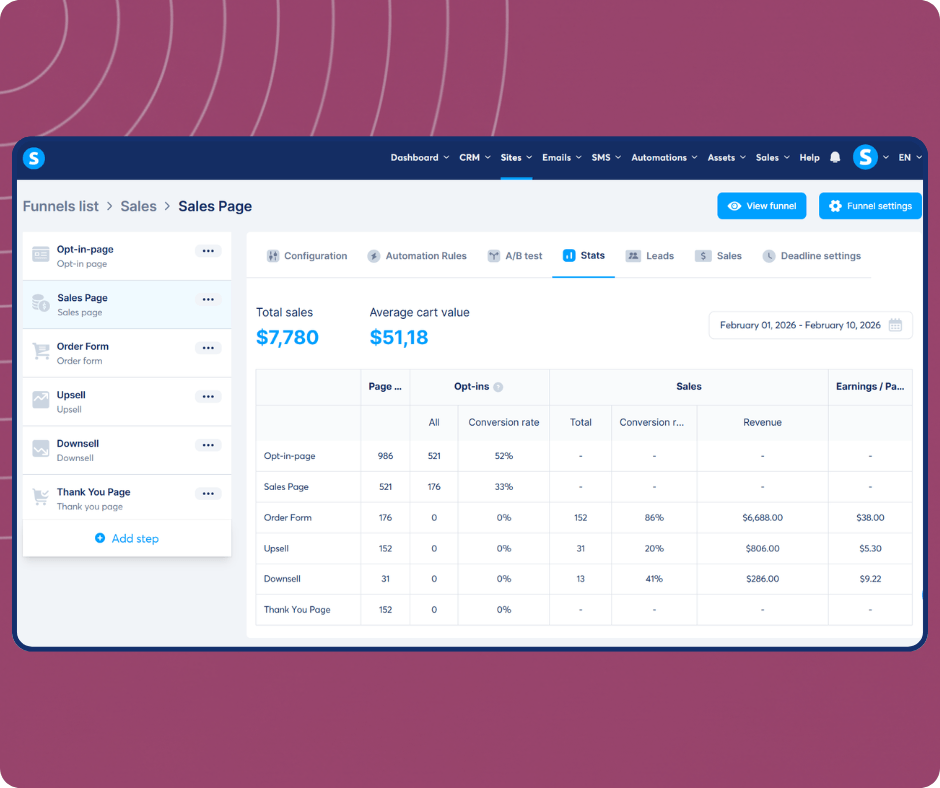
Official product screenshot. Source: Systeme.io. Vendor example, not AditsBlogs results.
Before sending, review Google’s email sender guidelines for authentication and delivery requirements. For commercial email aimed at US recipients, consult the FTC’s CAN-SPAM business guide for accurate sender details and opt-out requirements. These complement the official pricing, funnel, and email sources linked above.
Frequently asked questions
Can I start without buying a plan?
Systeme.io currently advertises a free account with no credit card required. Check its current limits before building your sequence.
Will it automatically bring visitors or sales?
No. You still need relevant traffic, a useful offer, clear communication, and a working customer journey. Software provides the setup, not a guaranteed business result.
Do I need to leave WordPress?
For the workflow suggested here, you can keep publishing on your existing blog and link to the signup page. Evaluate one funnel before considering wider changes.
Does this guide prove email deliverability?
No. Test your own sender setup and audience. Vendor screenshots and published features do not establish inbox placement or conversion performance for your business.
Final recommendation
Start with one resource, one signup page, and a short useful sequence. Test the entire journey before promoting it. If the free account handles that job well, keep using it until a real limit or business requirement justifies paying.
Check Systeme.io’s current plans and start with the option that fits.
Sources: Official pricing, funnel builder, and email marketing, checked 2 November 2026. The workflow examples are editorial suggestions, not reported test results.
STAY CONNECTED
More from AditsBlogs, in your inbox
Get occasional updates on new guides, tools, games and creative posts.