Disclosure: this post may contain affiliate links; AditsBlogs may earn a commission at no extra cost to you.
- Does checking your own CIBIL score reduce it?
- The official free-report route
- Step 1: Start on the bureau’s real website
- Step 2: Complete identity verification
- Step 3: Download and store the full report
- Soft enquiry versus hard enquiry
- What to inspect in the report
- Personal and contact details
- Loan and card accounts
- Payment history
- Enquiries
- If information is wrong
- A practical credit-check routine
- Conclusion
- Frequently asked questions
- How many free CIBIL reports can I get?
- Is checking CIBIL through the official website a hard enquiry?
- Why did my score change after I checked it?
- Can CIBIL correct a lender’s data immediately?
- What should I do about an unknown enquiry?
Checking your own credit score should help you prepare for a loan, not create another worry. Yet many borrowers hesitate because they have heard that “every credit check lowers the score.” That statement mixes up two different events: a lender’s credit application enquiry and your own review of your report.
In India, the Reserve Bank of India requires credit information companies to provide one free full credit report, including a score, once during each calendar year to eligible individuals after authentication. TransUnion CIBIL also offers a free annual CIBIL Score and Report through its official website. The safest approach is simple: use the credit bureau’s official route, verify the report carefully, and avoid submitting unnecessary loan applications just to see your eligibility.
Does checking your own CIBIL score reduce it?
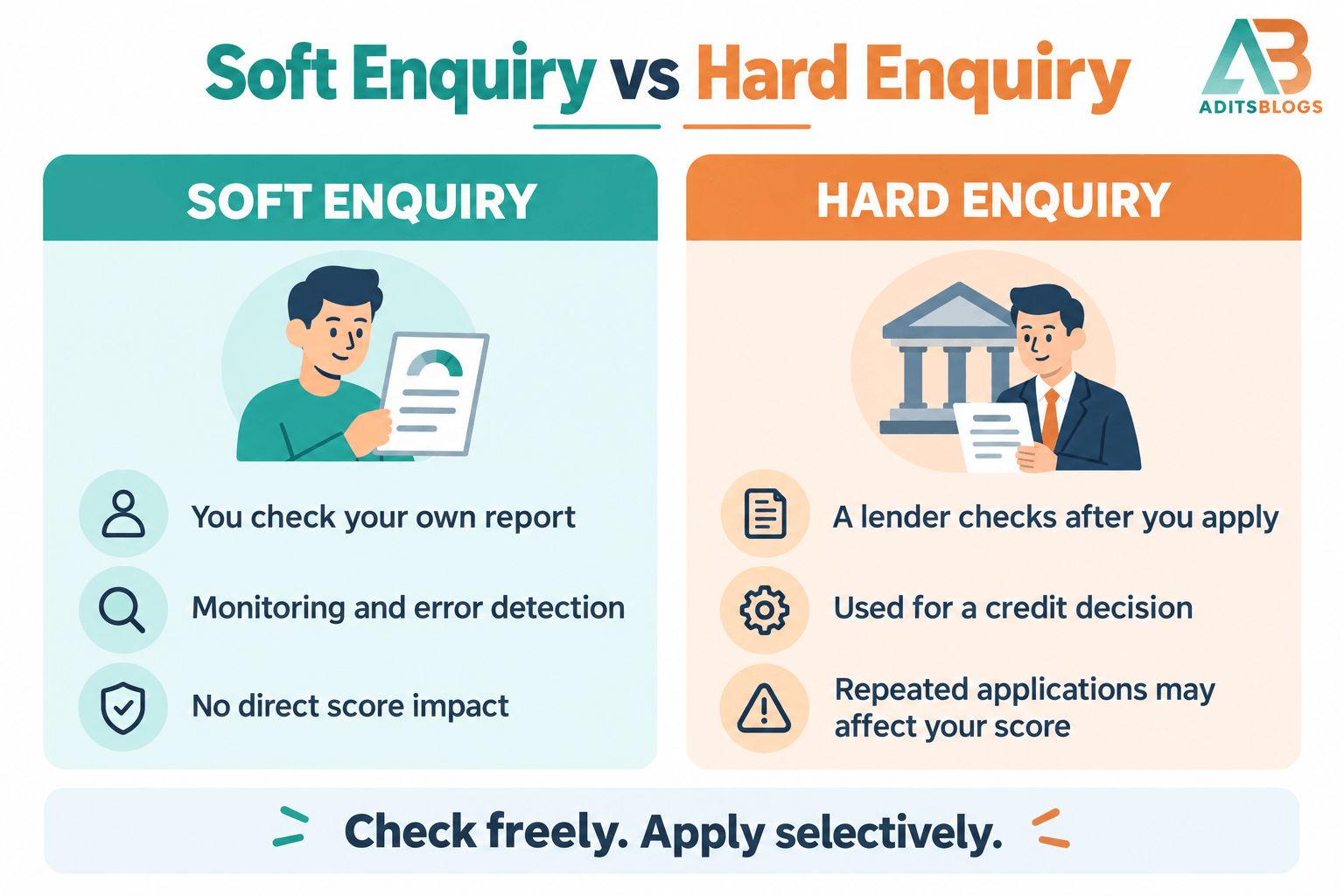
No. Reviewing your own credit report is generally treated as a self-enquiry or soft enquiry. It is a monitoring action, not a request for new credit. It does not have the same scoring effect as a lender checking your file after you apply for a loan or credit card.
A hard enquiry is different. It is created when a bank, NBFC or card issuer accesses your report for a credit decision. One genuine application is not automatically a problem, but several applications within a short period can signal credit hunger. The practical rule is to monitor freely, compare offers without submitting multiple applications, and apply only when the product and eligibility fit. If you are new to credit, this guide to understanding financial basics provides useful context.
The official free-report route
Step 1: Start on the bureau’s real website
Open the official TransUnion CIBIL website and locate the Free Annual CIBIL Score and Report option. Do not begin from a link received through an unsolicited message, social-media advertisement or unknown loan app. A copied page can look convincing while collecting PAN, date of birth, mobile number and one-time passwords.
Step 2: Complete identity verification
Enter the requested identity and contact details accurately. You may be asked to verify your mobile number or answer questions connected to your credit history. Complete the process only on the bureau’s secure domain. Never share an OTP with a person claiming that they must “activate” or “correct” your score.
Step 3: Download and store the full report
The number alone is not enough. Save the full report because it shows the accounts, balances, payment history and enquiries behind the score. Store it in a protected folder, not in a public messaging group or shared computer. The RBI framework says the free full credit report should show the latest exposure reported by credit institutions and contain the detailed information available to lenders.
Soft enquiry versus hard enquiry
| Action | Typical record | Expected score impact | Best use |
|---|---|---|---|
| You check your own report | Self/soft enquiry | No direct scoring impact | Monitoring and error detection |
| A lender checks after an application | Hard credit enquiry | May influence the score, especially when repeated | One considered application |
| A marketplace shows a promotional estimate | Depends on consent and process | Confirm before proceeding | Early comparison only |
| You request an eligibility call | Could lead to an application | Ask before authorising a bureau pull | Use cautiously |
Before entering PAN or accepting terms on a comparison site, read whether you are requesting a score, consenting to marketing, or authorising a formal credit application. Screens that bundle these actions deserve extra care.
What to inspect in the report
Personal and contact details
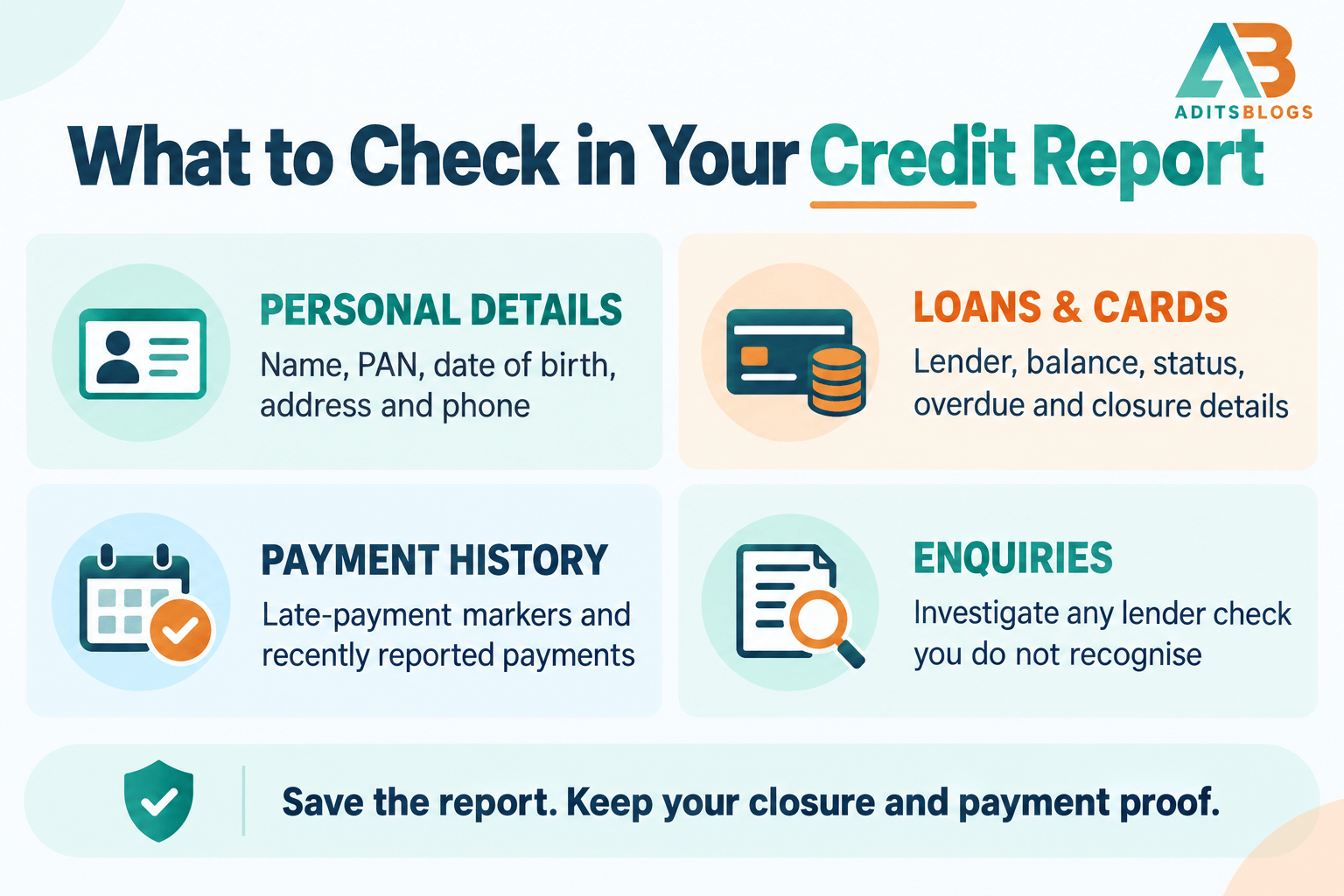
Check your name, PAN, date of birth, addresses and phone numbers. An old address is not automatically fraud, but an unfamiliar contact detail can indicate a reporting mix-up.
Loan and card accounts
Review every lender name, account type, opening date, sanctioned limit, current balance and status. Pay special attention to accounts marked overdue, settled, written off or closed. “Settled” is not the same as fully repaid and closed; if the label is wrong, collect closure documents before raising a dispute.
Payment history
Look for late-payment markers that do not match your records. Recent payments may not appear instantly because lenders report on a schedule. Compare the report date with your payment date before assuming an error.
Enquiries
An enquiry you do not recognise deserves investigation. First check whether you recently used a lender, card platform or authorised representative. If the enquiry still appears unfamiliar, contact the named institution and initiate a bureau dispute.
If information is wrong
Use CIBIL’s consumer dispute process and identify the exact account, field and correction requested. Attach or retain supporting evidence such as a no-dues certificate, closure letter, statement or payment receipt. Avoid vague complaints such as “my score is low”; a bureau cannot erase accurate negative information simply because it is inconvenient.
The RBI’s compensation framework gives credit institutions and credit information companies an overall 30-day period for resolving qualifying complaints about inaccurate credit information. The lender is responsible for verifying and sending corrected data; the bureau updates what the lender confirms. Keep the dispute reference number and escalate through the lender’s grievance channel or RBI’s complaint mechanism when applicable.
A practical credit-check routine
Check the report at least before a major loan or card application, and again after closing an account or resolving an error. Spread formal applications instead of sending the same details to many lenders in one evening. Pay dues on time, keep card utilisation controlled, and preserve closure documents.
Do not pay anyone who promises to “delete” accurate defaults or guarantee a 900 score. Credit improvement comes from correct data and consistent repayment behaviour, not a shortcut. For more practical explainers and digital-safety resources, explore the AditsBlogs home page, free tools, and contact page.
Conclusion
You can check your CIBIL score without hurting it when you use the official self-check route. Use the free annual report, read the complete file rather than only the number, investigate unfamiliar accounts or enquiries, and reserve hard enquiries for applications you genuinely intend to complete. That habit protects both your borrowing readiness and your identity.
Frequently asked questions
How many free CIBIL reports can I get?
RBI directions require each credit information company to provide one free full credit report, including the score, once in a calendar year to eligible individuals whose score is available with it.
Is checking CIBIL through the official website a hard enquiry?
No. Checking your own report is a self-monitoring activity and is different from a lender’s hard enquiry for a credit application.
Why did my score change after I checked it?
The timing may be coincidental. A lender could have recently reported a balance, payment, overdue status, closure or enquiry. Compare the current report with the previous one to find the changed field.
Can CIBIL correct a lender’s data immediately?
CIBIL can register a dispute, but the relevant credit institution normally has to verify the information. Keep documents and track the dispute reference until the correction is reflected.
What should I do about an unknown enquiry?
Confirm that you did not authorise it through a lender or marketplace, contact the institution named in the report, and raise a dispute if it remains unexplained. Change compromised credentials when fraud is suspected.
For general educational information only. Read the AditsBlogs disclaimer and confirm current terms directly with the relevant lender or credit bureau.